中国陕西省非遗之美图片
_nEO_IMG.jpg)
地坑院里的皮影戏
地坑院也叫天井院,是古代人们穴居方式的遗留,被称为中国北方的“地下四合院”,已有4000多年的历史。
皮影戏,是一种用兽皮或纸板做成的人物剪影以表演故事的民间戏剧。
Pit Courtyard Shadow Play
The Pit Courtyard or Patio Courtyard, also called the “Underground Siheyuan” of northern China, has a long history of 4,000 years. However, this architectural style can be traced back to the days of early cave-dwelling.
Shadow play is a marionette show that gives performances by shadows of figures made of animal leather or cardboard.
Shadow play is a marionette show that gives performances by shadows of figures made of animal leather or cardboard.
_nEO_IMG.jpg)
中国皮影戏
皮影戏是艺人在幕后用木杆操控影偶,通过光线照射在半透明的幕布上,伴随音乐和演唱进行表演的戏剧形式,皮影通常为皮制的彩色影偶。陕西皮影是中国皮影的重要组成。
Chinese Shadow Play
Shadow play is a marionette show with the puppeteer manipulating shadow puppets using strings tied to wooden sticks. The shadow is presented on a translucent curtain in performance with music and singing. A typical shadow puppet is made of colored-painting leather. Shaanxi shadow play is an integral part of Chinese shadow play.
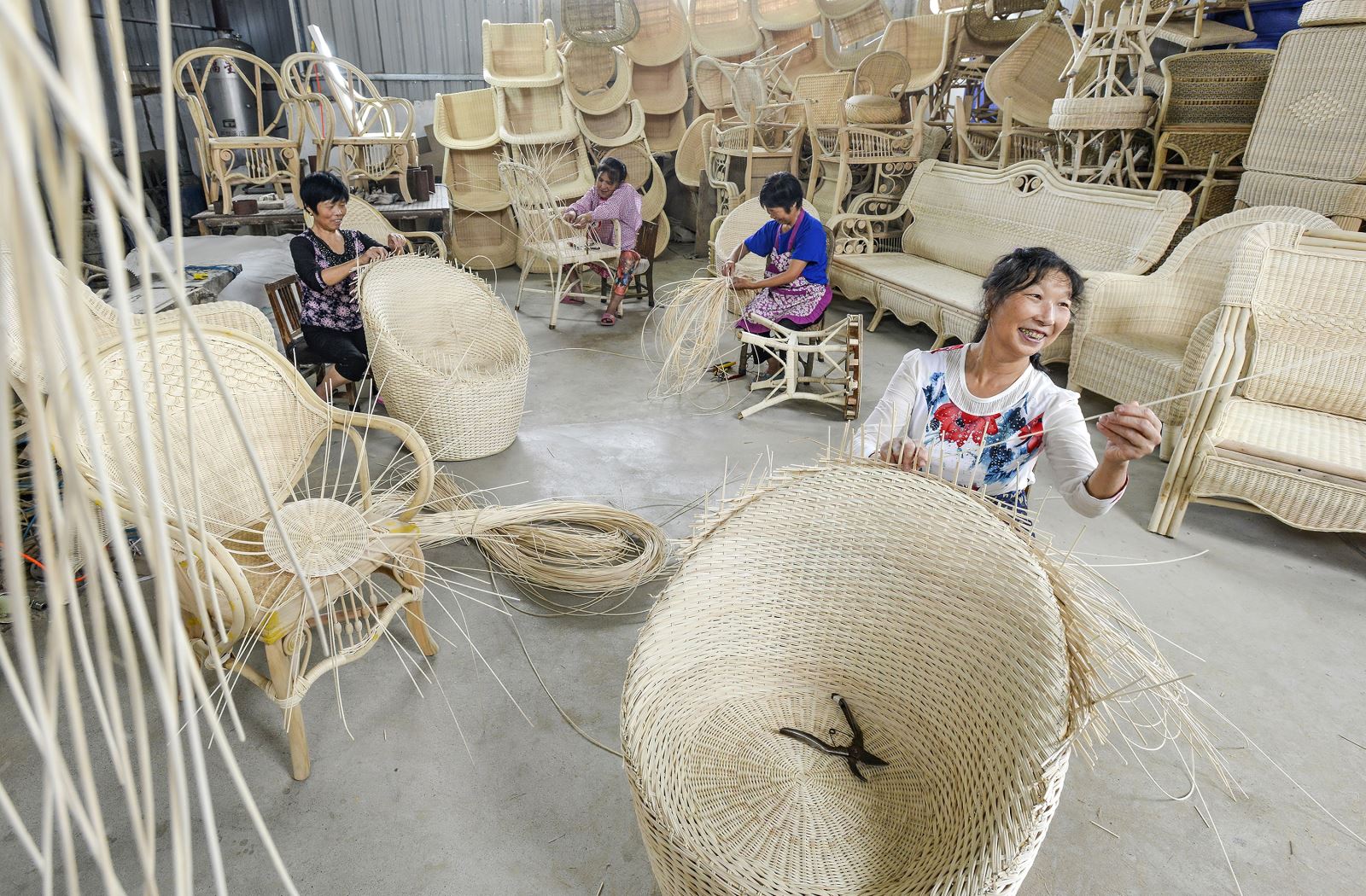
汉中藤编
汉中盛产藤条,是一种上好的天然编织材料,汉中人用此编制的藤椅、藤箱等日常用具等工艺品,制作精巧、绿色环保,雅致简朴、品种多样。
Hanzhong Rattan Weaving Handicrafts
Hanzhong City has rich rattan resources that make good natural woven material. Hanzhong locals make rattan woven handicrafts such as woven chairs, boxes, and other daily-use items. There is great variety in these exquisite eco-friendly handicrafts of graceful simplicity.
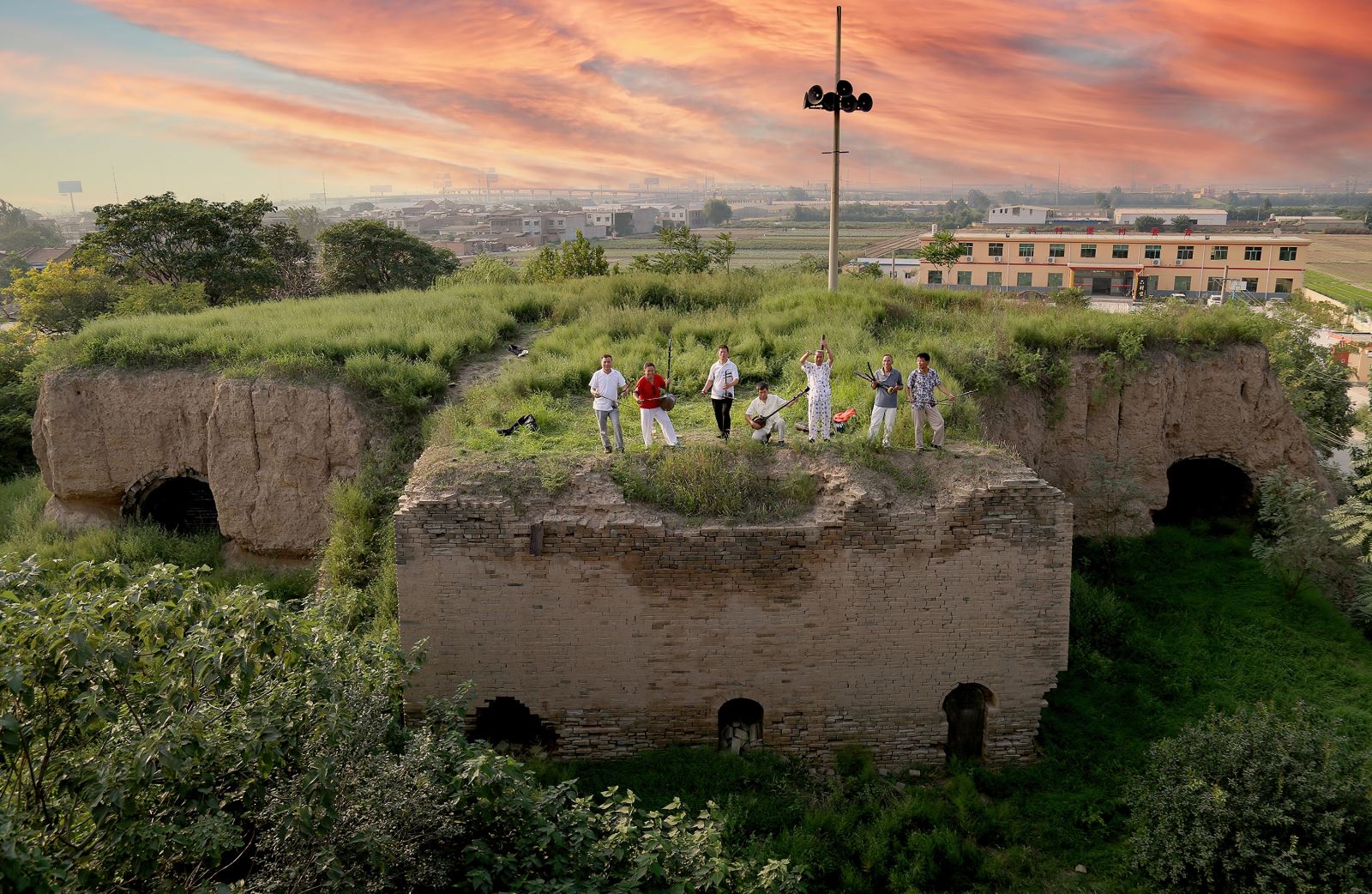
六村堡道情
道情,是中国传统曲艺中的一个地方剧种。六村堡道情起源于西安市汉长安城遗址内六村堡的道情唱腔。其唱腔以板式变化体为主,婉转缠绵,也被称为“北方的越剧”。
Liucun Fort Daoqing
Daoqing is a local opera in Shaanxi Province. Liucun Fort Daoqing traces to the Han Dynasty (206 B.C. – A. D. 24) at Liucun Fort in the capital city, Chang’an (now Xi’an). It is also known as “North China Yue Opera,” with sweet and melodic singing. (Note: Yue Opera is renowned for its sweet melody among Chinese operatic categories.)
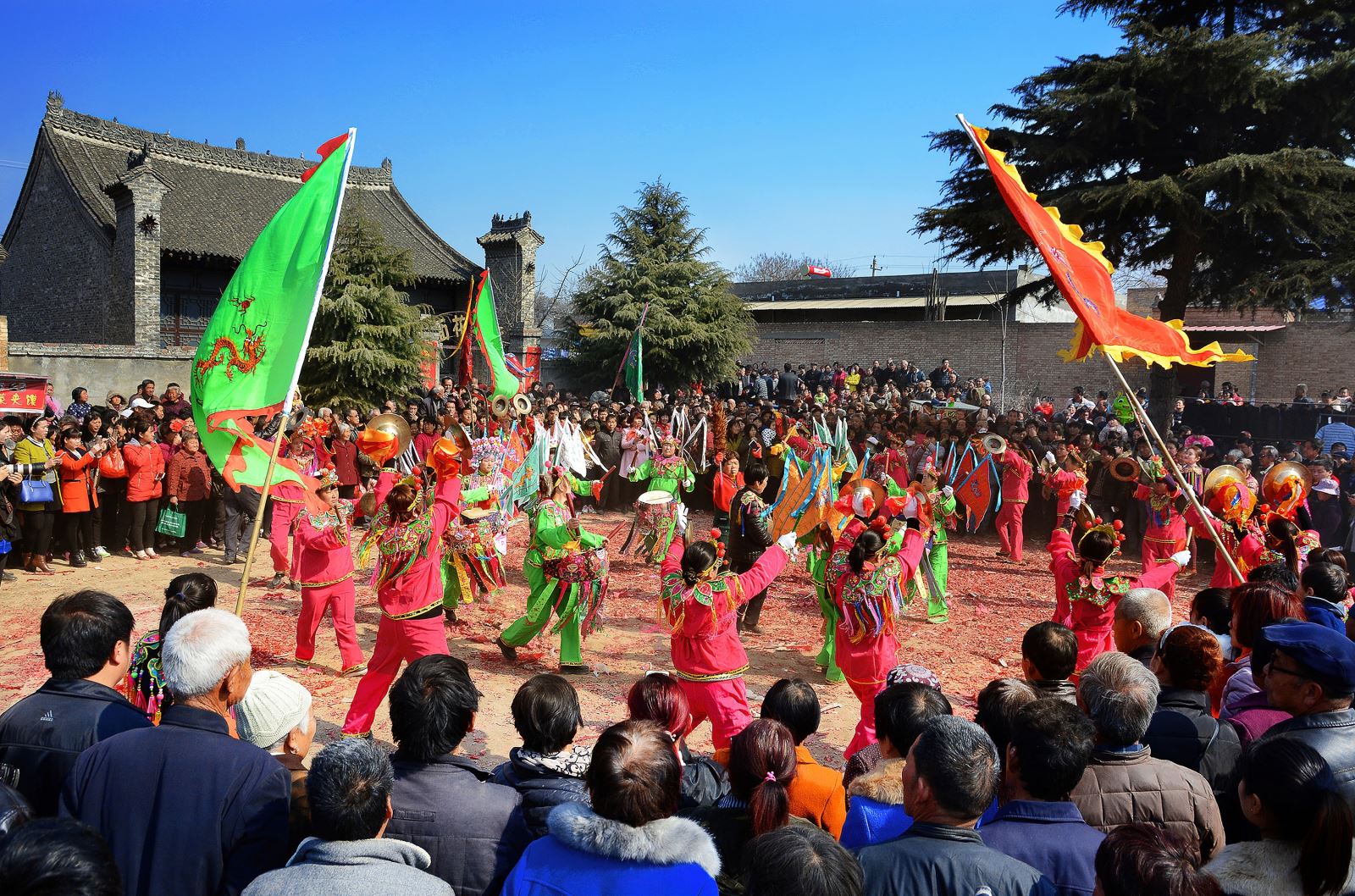
大荔县“二月二”庙会
据传,唐代时大荔县阿寿村一带曾暴发瘟疫,药王孙思邈路过此地,配良药治愈病患。为此,阿寿村建起药王庙,并于每年“二月二”举办庙会祭祀“药王爷”。
Dali County Temple Fair
A plague broke out in A’shou Village, Dali County, during the Tang Dynasty. Sun Simiao, China’s King of Medicine, happened to pass through the village, made medicine, and cured all the patients. In return, local villagers built a temple to worship him, and an annual temple fair was held on the 2nd day of the 2nd lunar month in his honor.
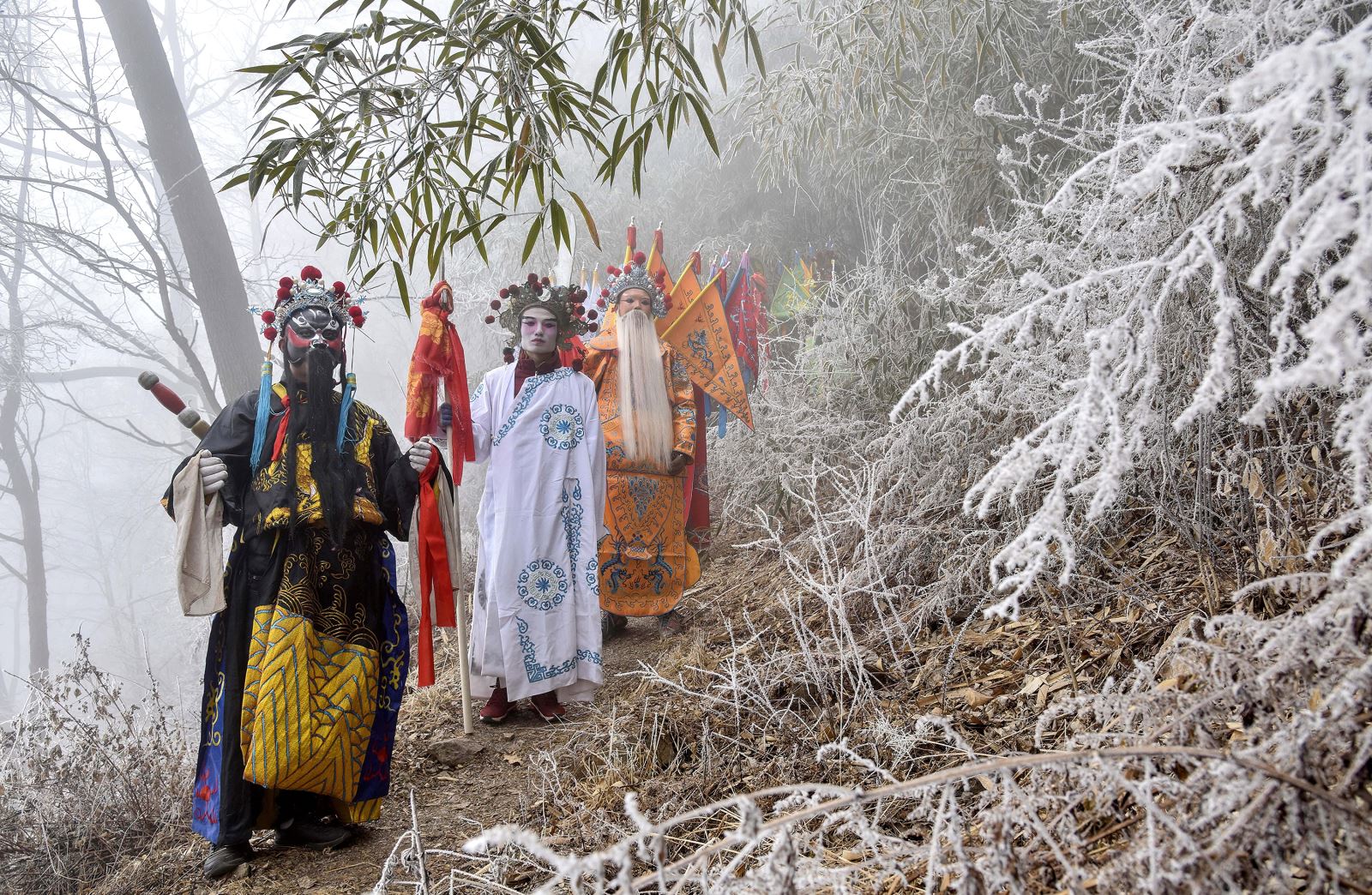
陇州社火
“社火”是中国汉族民间一种传统庆典狂欢活动。陇州社火有芯子、高跷、跷板等20多个种类。其脸谱色彩浓烈、笔触细腻,表演原汁原味、丰富多样。
Longzhou Shehuo
Shehuo is a traditional folk celebration in China. Longzhou Shehuo has more than 20 types of stilts featuring colorful delicate masks and used to give varied performances.
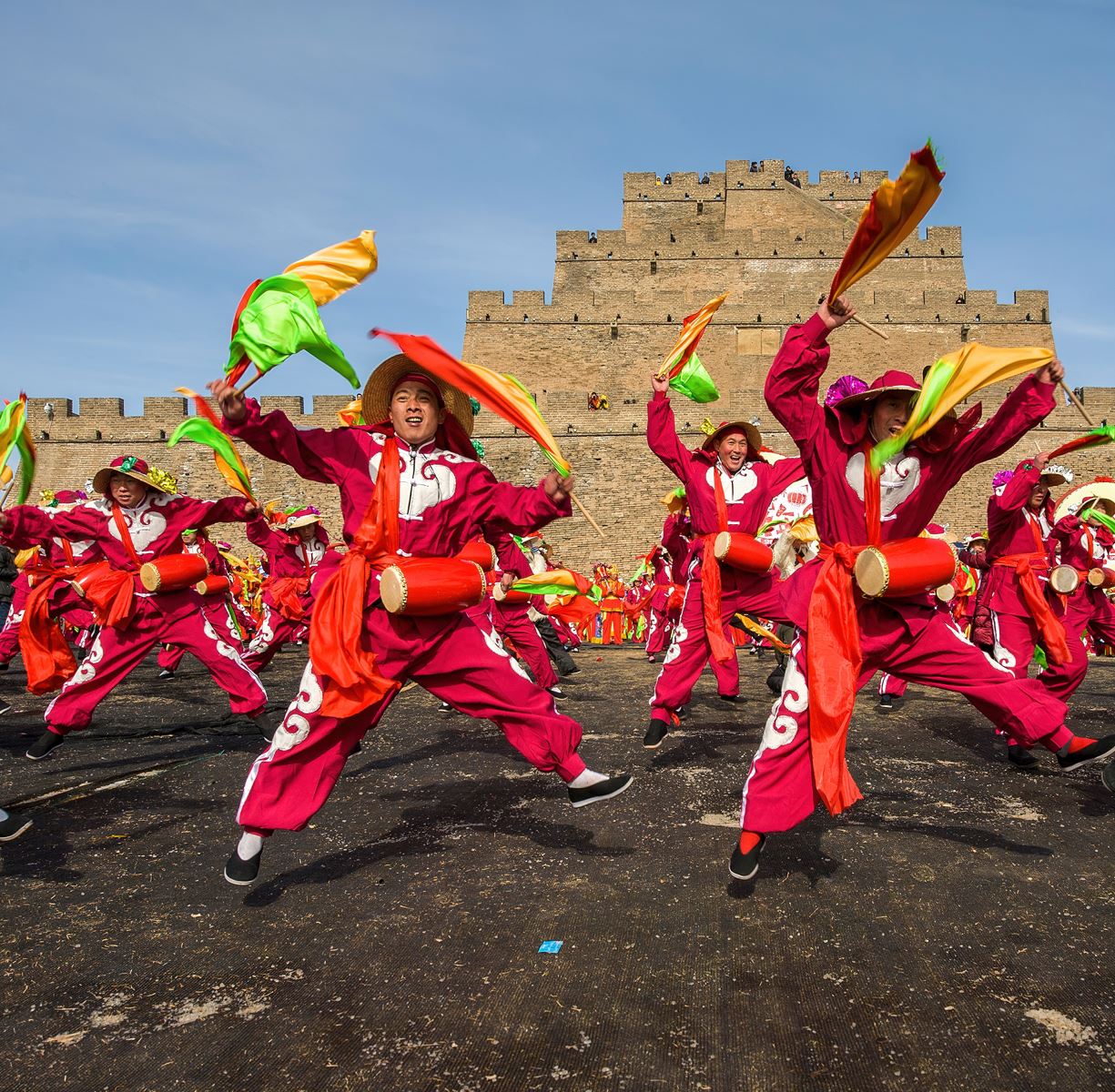
横山老腰鼓
明代中期,榆林横山一带戍边军户常带腰鼓,遇敌情击鼓为号,胜利后击鼓庆祝。后来腰鼓逐渐扩展到当地民间娱乐中。鼓手动作矫健有力、步法多变,给人以振奋的力量。
Hengshan Waist Drum
In the mid-Ming Dynasty, soldiers defending the frontier in the Yulin and Hengshan carried waist drums. When they encountered enemies or won a battle, they beat the drums conveying messages and celebrating victory. Later, the waist drum show became a part of local folk entertainment. Drummers express strength and vitality with their vigorous movements and varied footwork.
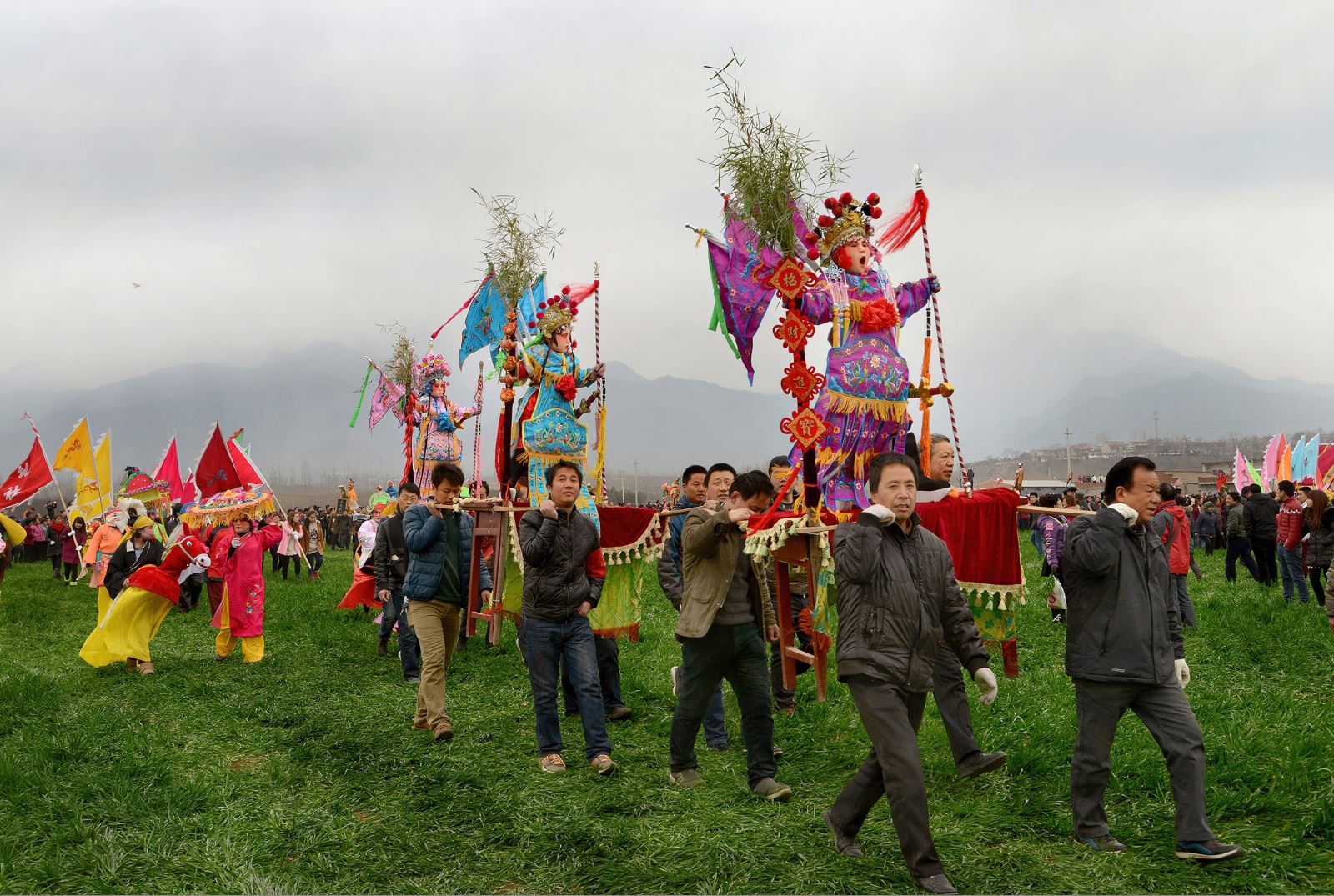
侯官寨迎春“牛老爷”社火
西安市长安区侯官寨的民间传说,某年立春日,当地县令下乡扶犁吆牛劝民春耕。此后,乡民祭祀农神便装扮成县令催耕的形象,逐步演变形成“牛老爷社火”。
Houguan Village Spring “Lord Cow” Shehuo
According to the folktale of Houguan Village, Chang’an District, Xi’an city, there was once a local county magistrate who went to the countryside and tilled fields in person on the First Day of Spring to encourage farmers to do spring plowing. Since then, villagers began to dress like the county magistrate (traditionally called “the Lord”) when they worshipped the God of Agriculture. Gradually, it evolved into the “Lord Cow” Shehuo.
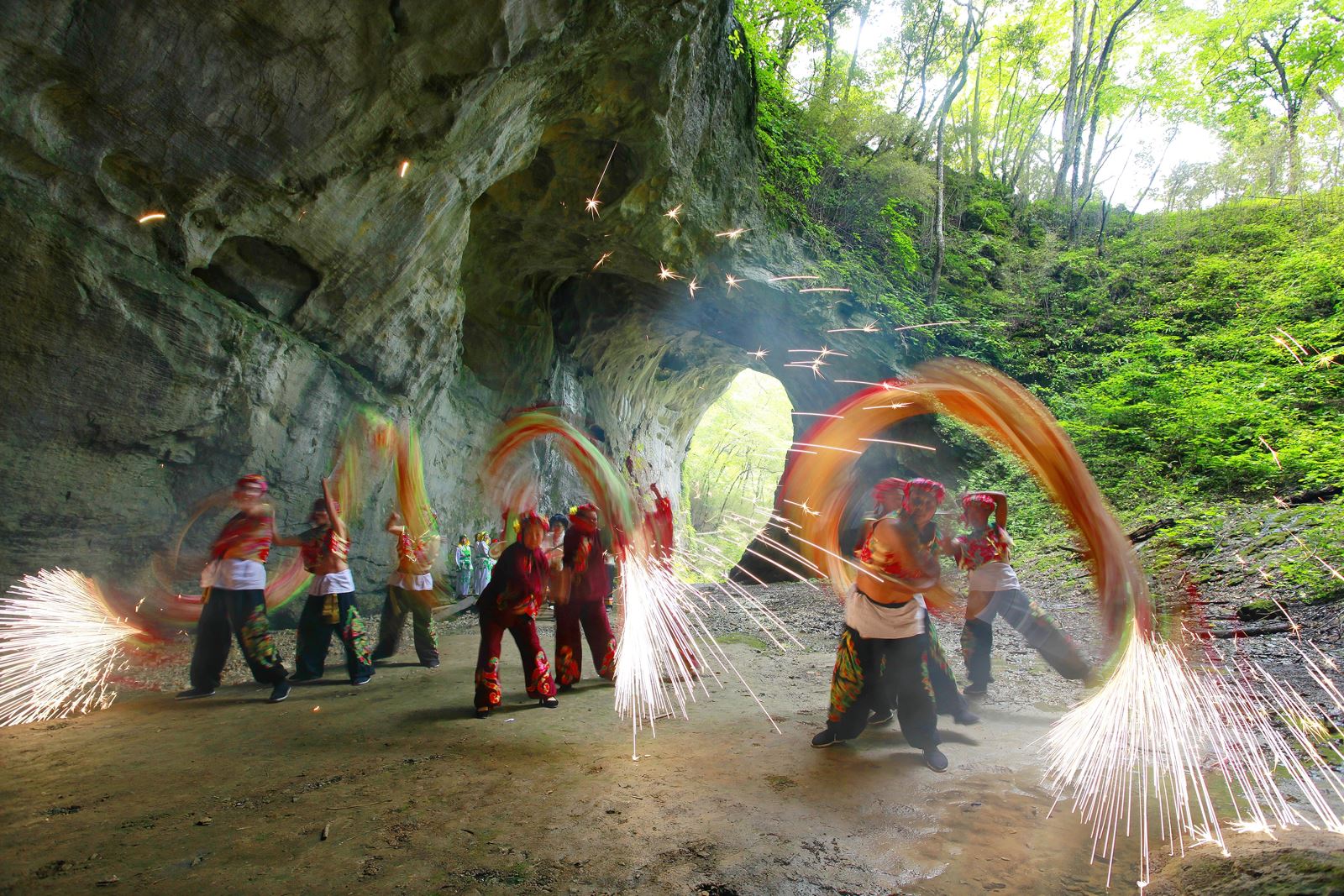
五龙社火
社火是中国汉族民间一种庆祝春节的传统庆典狂欢活动,是高台、高跷、旱船、舞狮、舞龙、秧歌等等的统称。略阳县五龙社火就是其中特色鲜明的一种社火形式。
Wulong Shehuo
Shehuo, a traditional parade celebration of Han people in China during the Spring Festival, integrates a variety of Chinese traditional performances such as Yangko, dragon, and lion dances. Wuolong Shehuo in Lveyang County is a distinctive type.
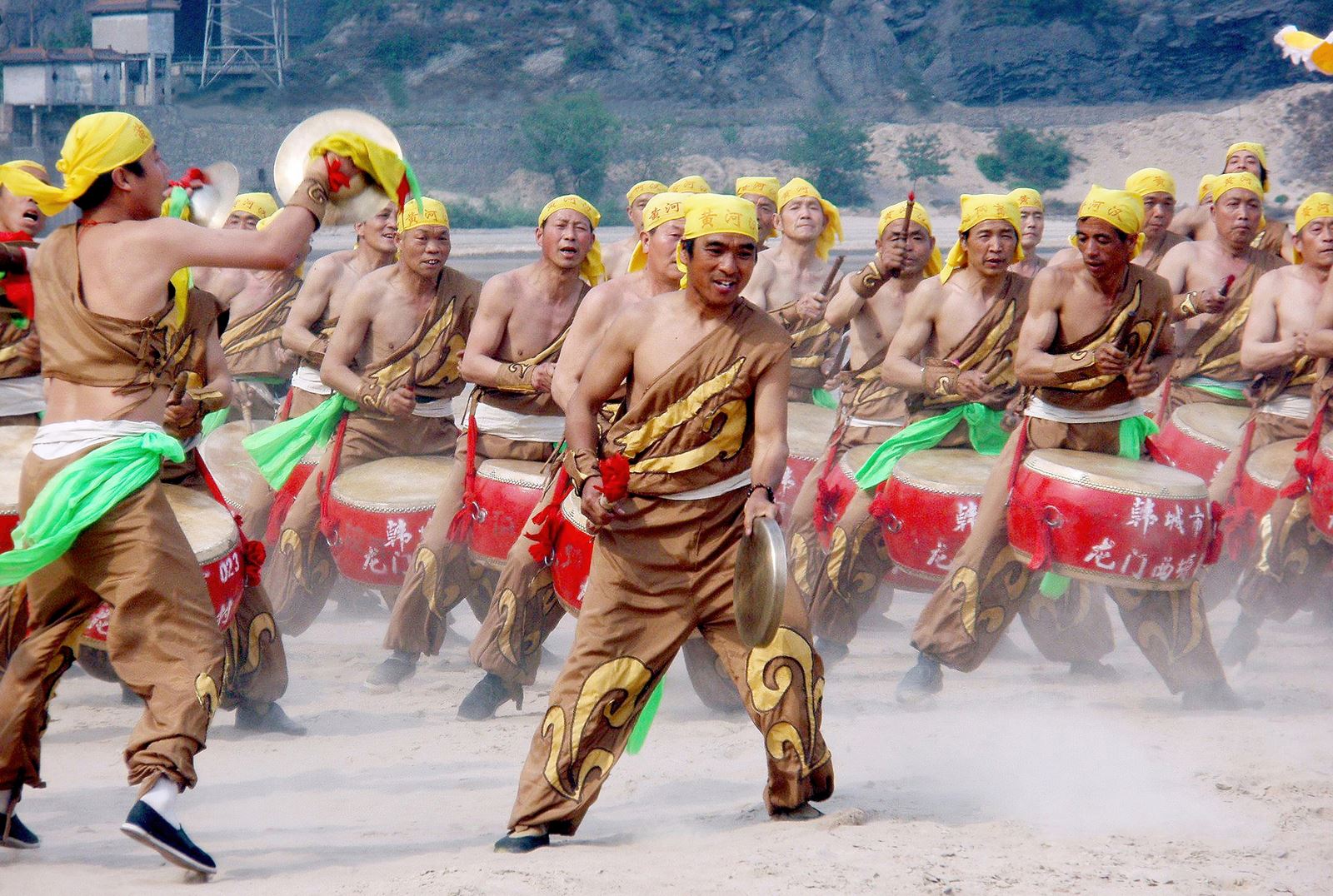
韩城行鼓
行鼓是陕西韩城当地特有的地方鼓种之一。表演时,鼓手头戴战盔,腰束遮鞍战裙,击鼓时模拟蒙古骑士的身姿,狂野奔放,气势豪迈。
Hancheng Xinggu
Xinggu is a local drum performance in Hancheng, Shaanxi province. A typical Xinggu drummer wears a helmet and a saddle skirt and imitates a Mongolian knight in his wild, unrestrained, and imposing performance.
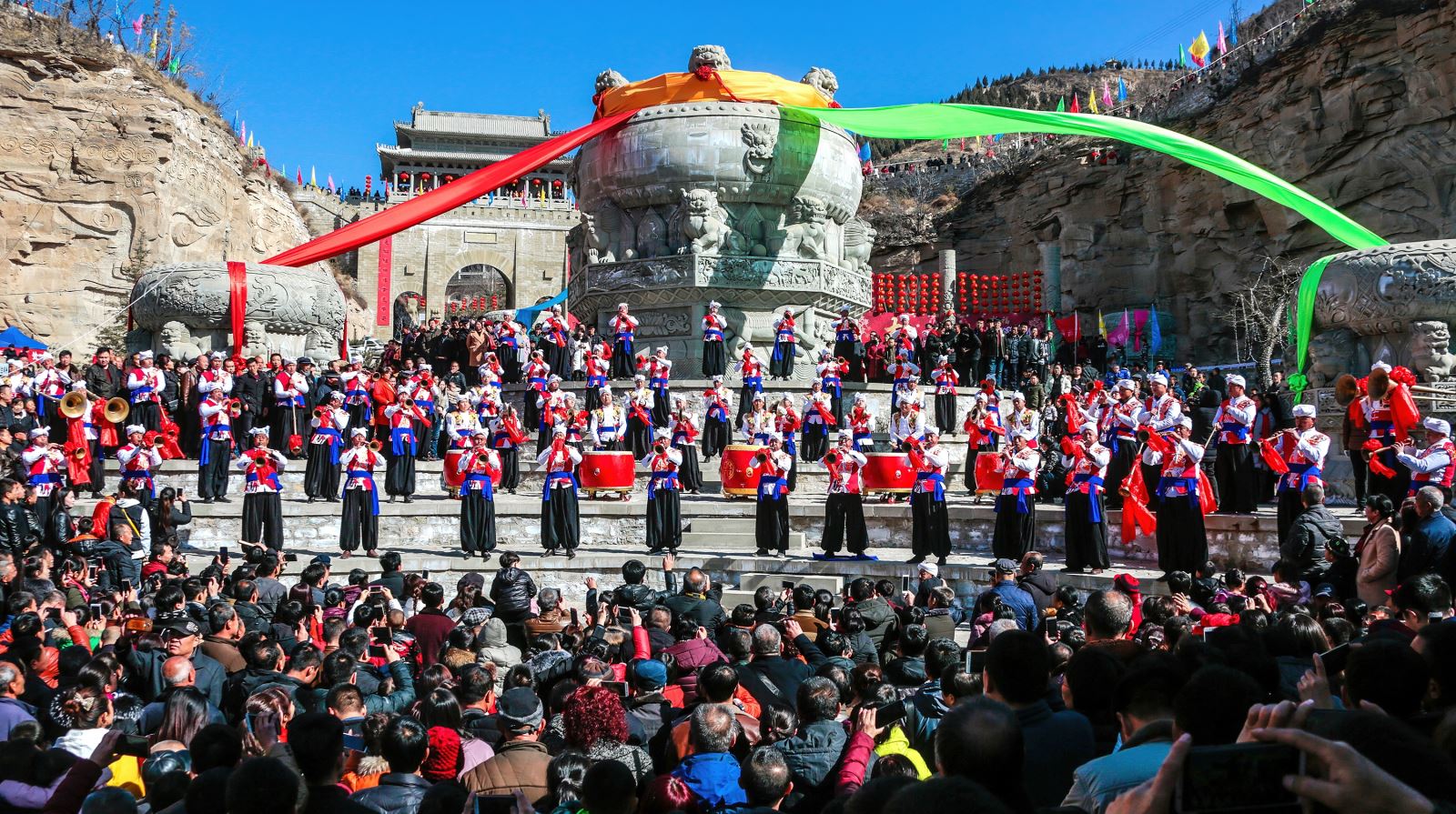
绥德石雕技艺和绥米唢呐
绥德石雕雕刻技艺是石匠用传统的石雕工具在石材上因材施艺的个性化手工制作,距今至少有2000多年。
绥米唢呐是陕北大唢呐艺术的代表性区域,主要流传在陕北绥德、米脂一带,至今已有六百多年的历史。
Suide Stone Sculpture Technique & Suide-Mizhi Suona
Suide stone sculpture, with more than 2,000 years of history, is a type of traditional personalized stone carving in Suide County of northern Shaanxi Province.
Suide-Mizhi Suona, representative suona horn art in northern Shaanxi in the Suide and Mizhi area, has a history of more than 600 years.
Suide-Mizhi Suona, representative suona horn art in northern Shaanxi in the Suide and Mizhi area, has a history of more than 600 years.
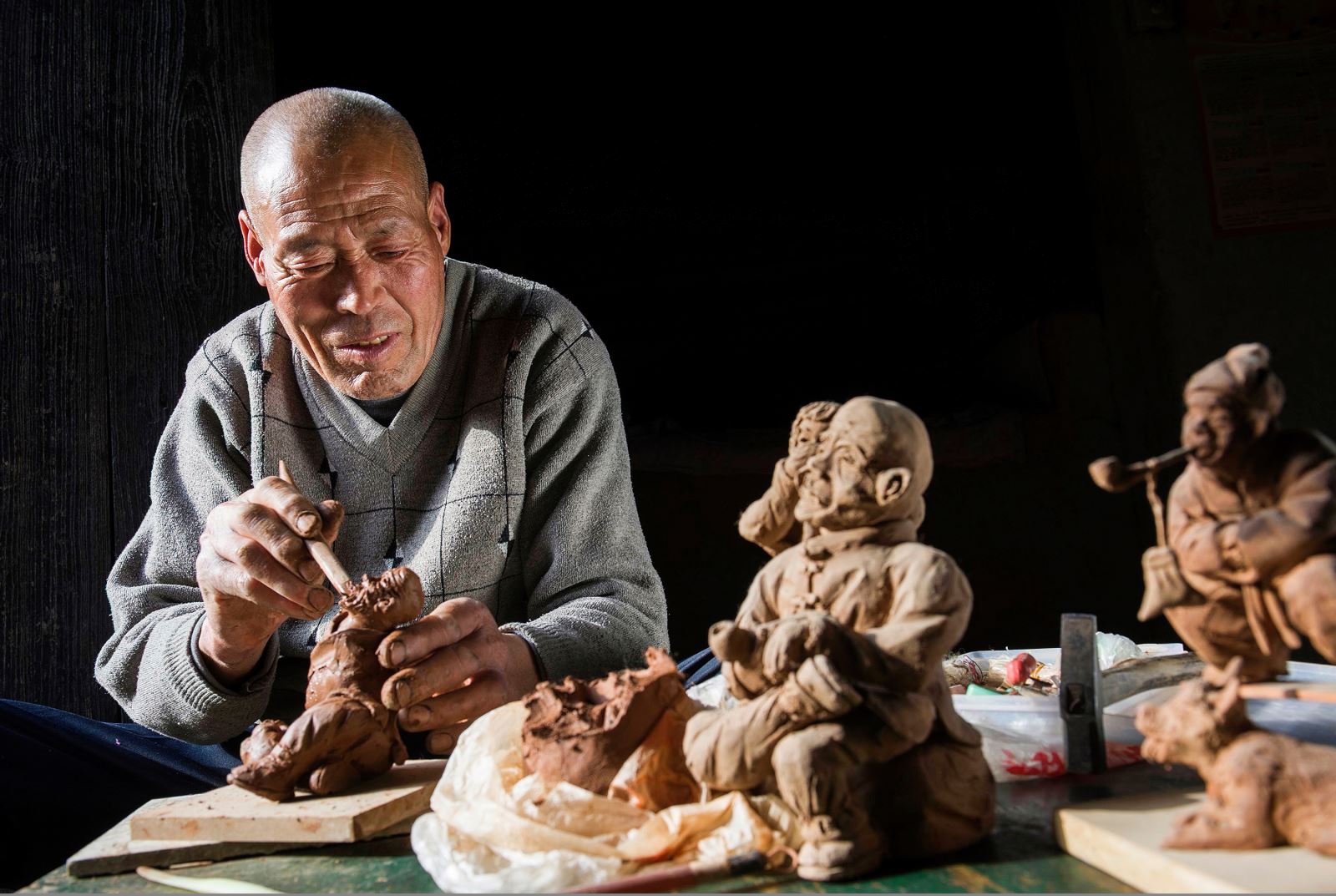
捏泥人(长安泥塑)
一双手,一把泥,捏出人间百样情。西安市长安区侯官寨村捏泥人是我国古老的一门传 统民间艺术,它以泥巴陶土为主料,调成不同色彩,用手和简单的工具塑造各种形象。
Chang’an Clay Sculpture
To create a world out of a handful of clay. Clay figuring making is an ancient type of Chinese traditional folk art in Houguan Village, Chang’an District, Xi’an City. It uses clay as the main material, mixes it with different color paints, and shapes various images with hands and simple tools.
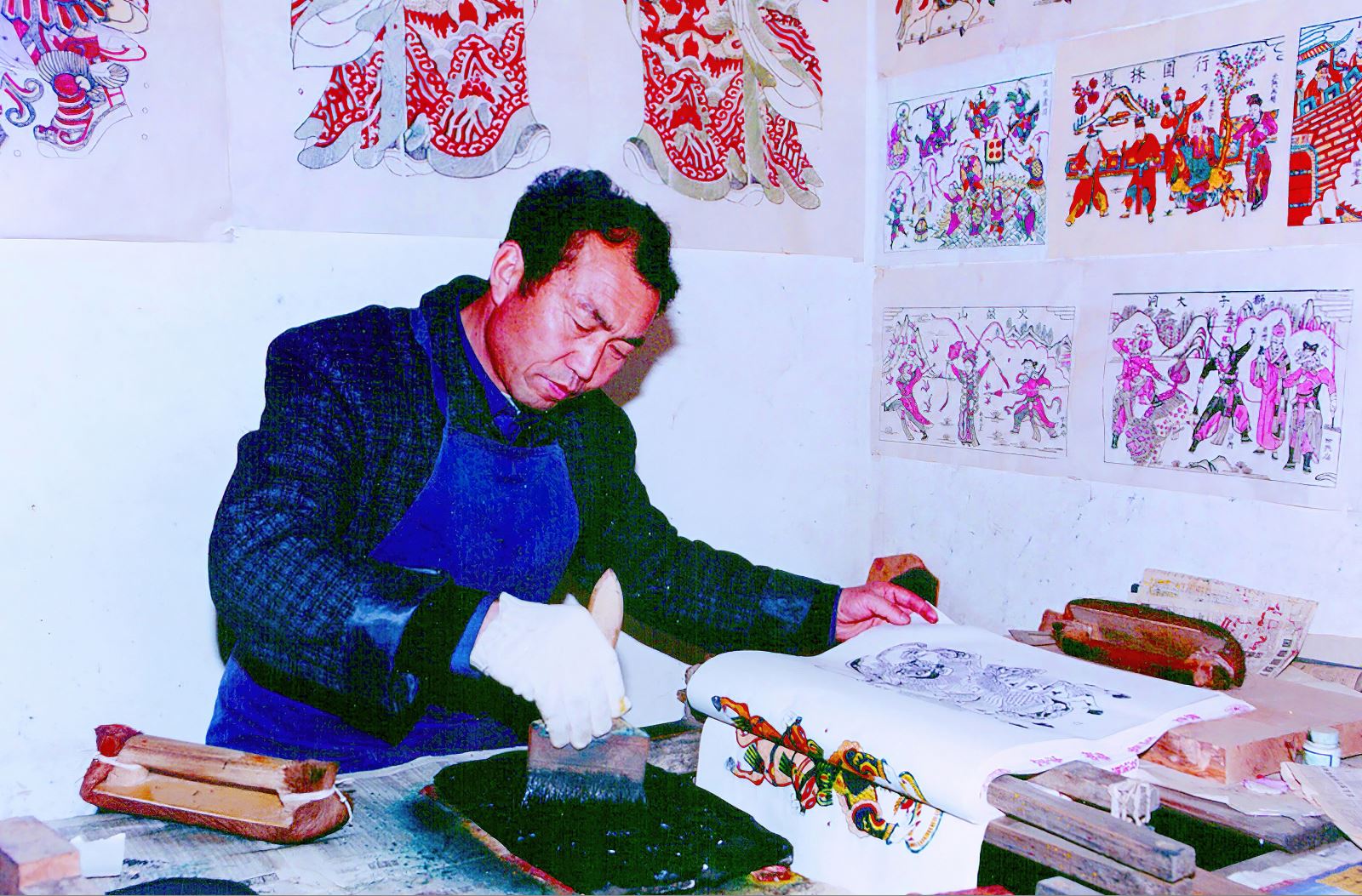
凤翔木版年画
木版年画是中国历史悠久的传统民间艺术形式,凤翔木版年画以其粗犷大方,色彩鲜明的特征广受欢迎,成为我国木版年画艺术宝库中的一枝奇葩。
Fengxiang New Year Wood-Block Prints
New Year woodblock print is a form of traditional folk art with a long history in China. Fengxiang New Year woodblock prints are especially popular due to their innovative style and vibrant color. It is now regarded as a gem in the treasure house of Chinese New Year woodblock prints.
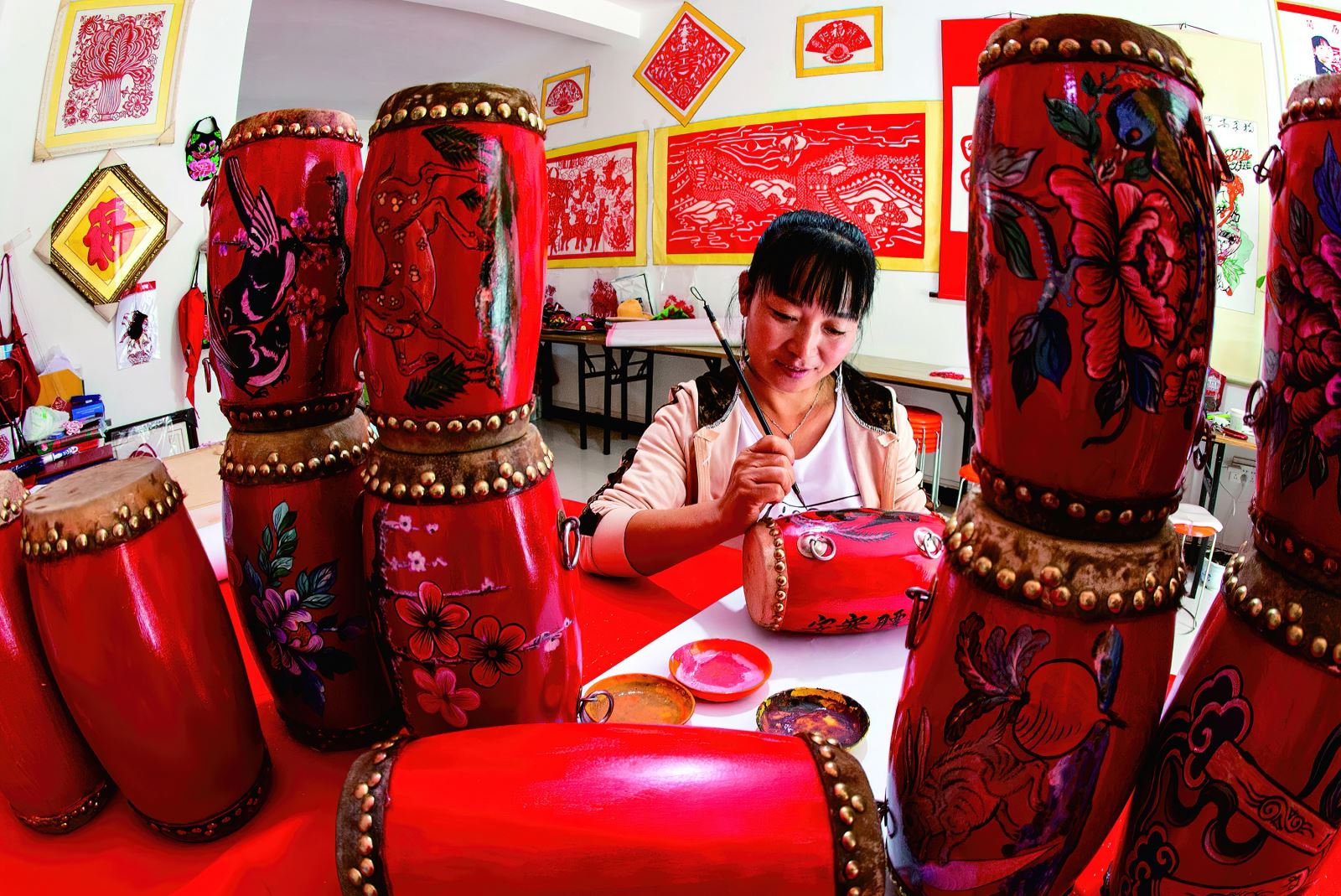
安塞农民画
安塞有民间画家千余人,主要以妇女为主,画作构图奇美,想象力丰富,手法大胆,色彩效果十分明显,具有独特的艺术效果,被誉为“东方的毕加索”。
Ansai Farmer Paintings
Ansai in the northern Shaanxi is home to more than a thousand folk artists, mostly women. Ansai farmer paintings bear unique artistic effects due to their beautiful composition, bold imagination, innovative painting skills, and vibrant color. For this reason, an excellent Ansai farmer painter is sometimes dubbed “an Oriental Picasso”.
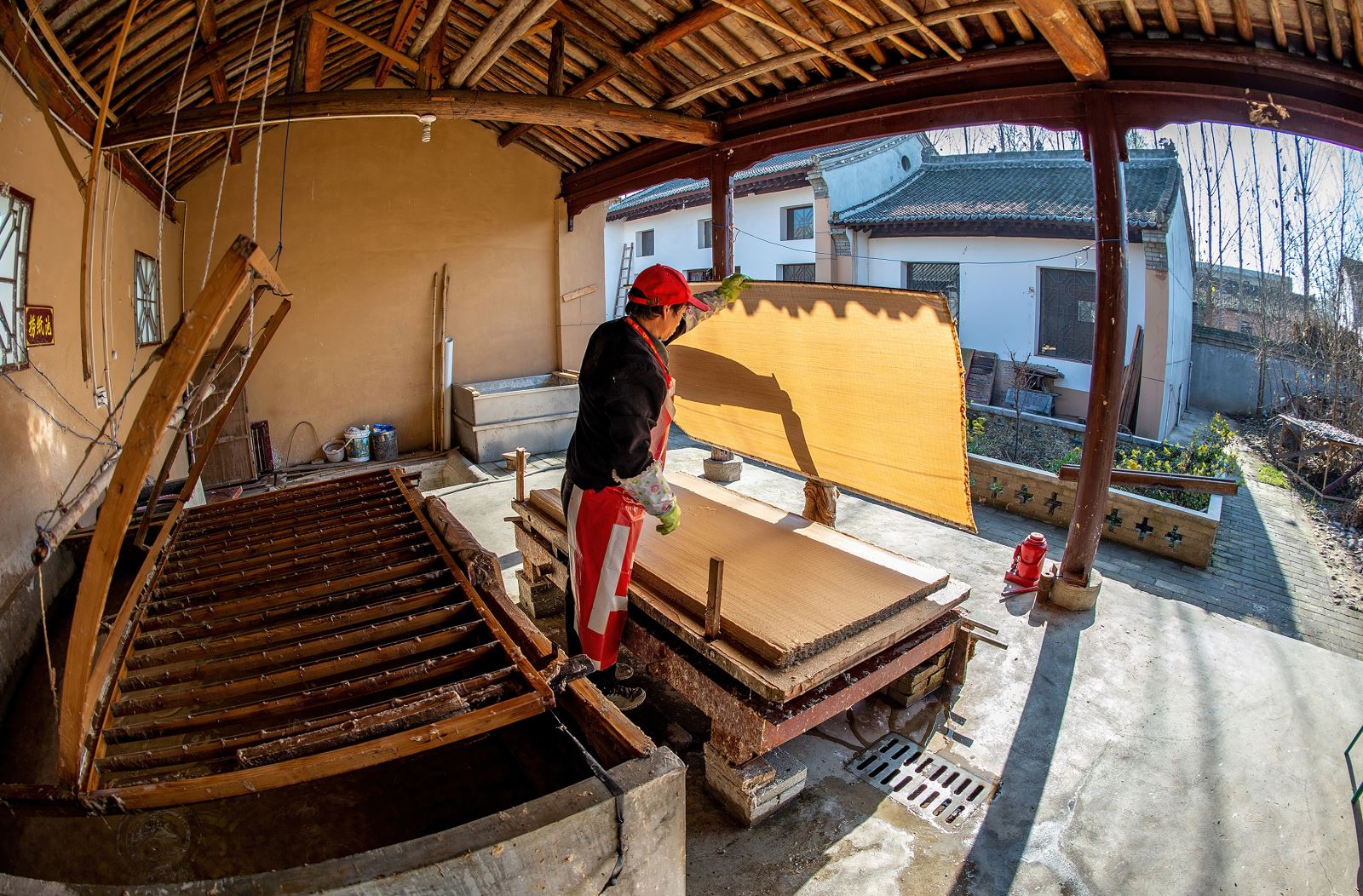
起良村造纸制作技艺
起良村造纸起源于东汉末年,当年起良村地处汉上林苑五柞宫,是皇室的造纸作坊。村民世代以蔡伦的造纸术手工制造“汉麻纸”即“蔡侯纸”为业,一直传承至今。
Qiliang Village Paper Making Technique
Papermaking in Qiliang Village originated in the late Eastern Han Dynasty, or late in the 1st century. Qiliang Village is located in Wuzuo Palace, of the Han Dynasty’s Shanglin Royal Park, also used as a royal papermaking workshop. Afterward, villagers depended on the production of handmade Han Linen Paper using a technique created by Cai Lun.
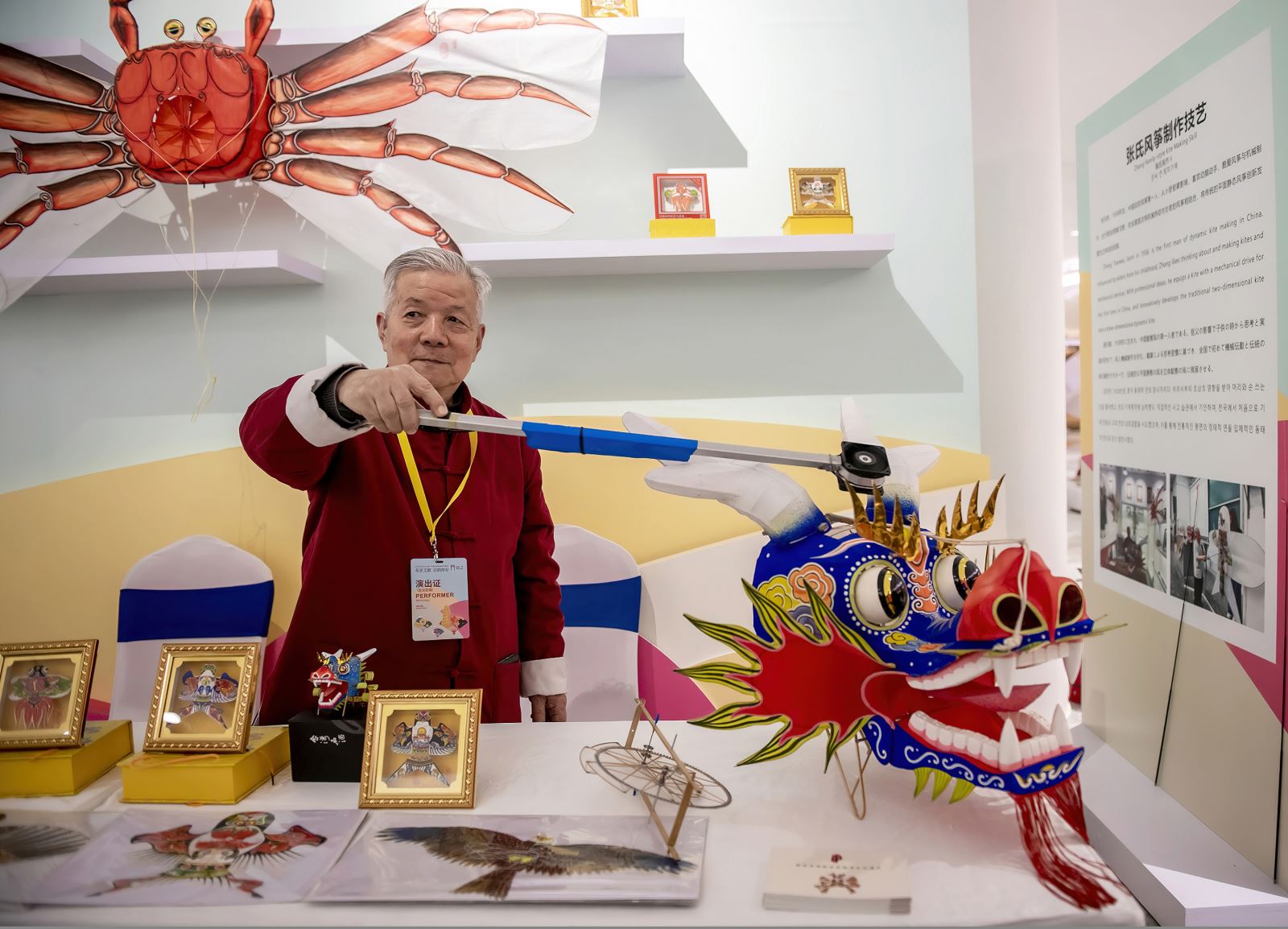
张氏风筝制作技艺
张氏风筝制作技艺是西安张天伟的独特技艺。他创造性地在传统风筝的基础上增加了风力机械传动装置,使静态风筝变成了一个个生动有趣姿态各异的动态风筝。
Zhang’s Kite Making Techniques
Zhang Tianwei, a Xi’an native, invented zhang’s kite-making techniques. He creatively added wind power machinery to traditional kites, making static kites into vivid and interesting dynamic kites with different images.
Zhang Tianwei, a Xi’an native, invented zhang’s kite-making techniques. He creatively added wind power machinery to traditional kites, making static kites into vivid and interesting dynamic kites with different images.
.jpg)
澄城砂器烧制技艺
澄城“瓷砂始于唐”,尧头镇一带坩土矿夹生白、紫两色,是烧制陶瓷、砂器的原料。清代时,尧头手工烧制陶瓷、砂器颇具规模,一直传承至今。
Chengcheng Pottery Making Technique
The manufacturing of porcelain and pottery in Chengcheng County originated in the Tang Dynasty. Crucible clay ore in the Yaotou Town area of Chengcheng County has white clay and purple clay, raw materials for making porcelain and pottery. During the Qing Dynasty, the handcrafted porcelain and pottery manufacturing industry in Yaotou Town developed on a large scale and has been passed down to the present.
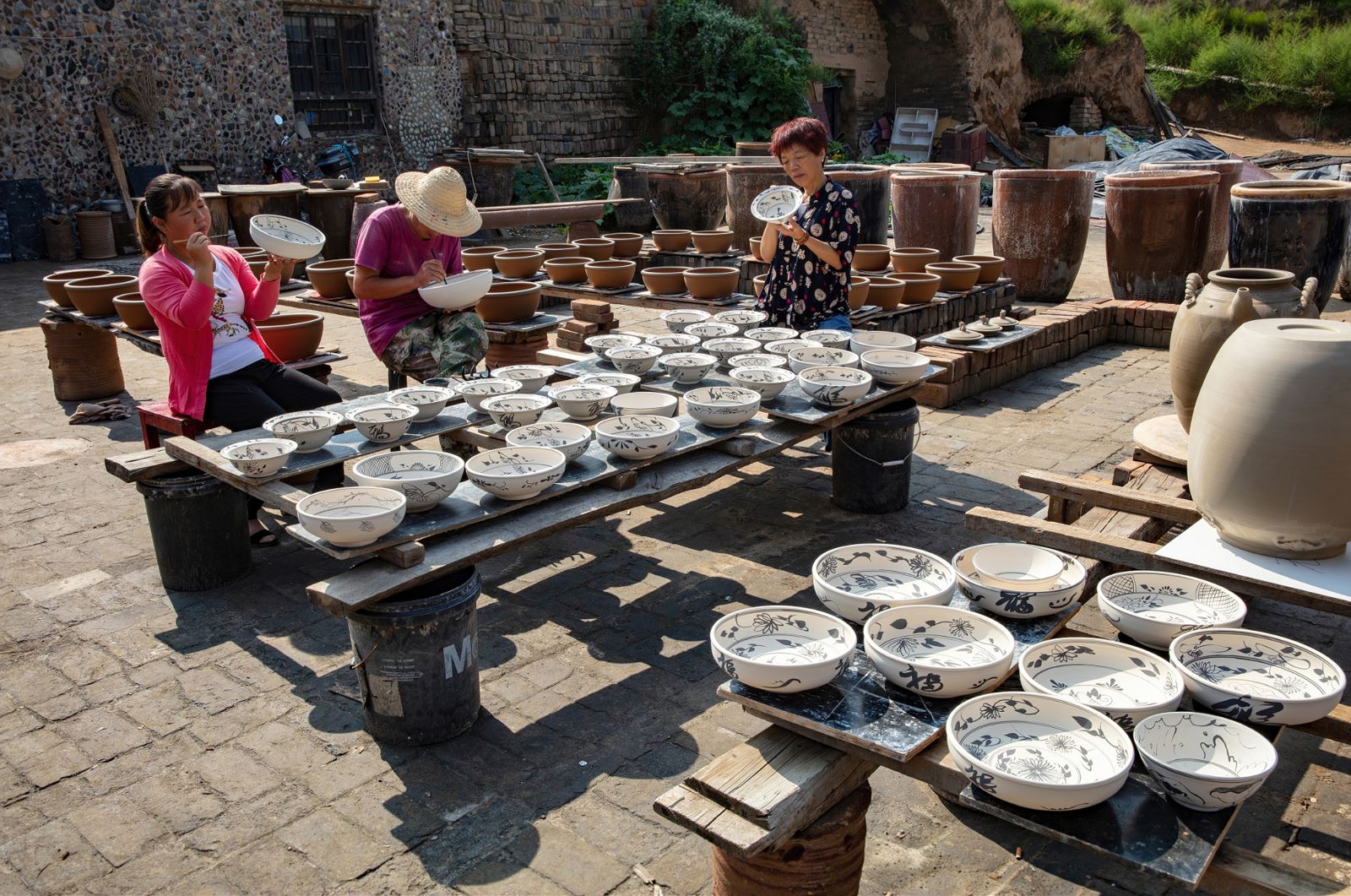
耀州窑陶瓷烧制技艺
耀州在唐代就是中国陶瓷烧制的著名产地,耀州窑是宋代名窑之一,是中国“六大窑系”中最大的一个窑系,也是北方青瓷的代表。
Yaozhou Porcelain Making Technique
In the Tang Dynasty, Yaozhou was one of the well-known production sites of China’s porcelain. Yaozhou kiln, the representative kiln of celadon of northern China, is one of the most famous Song Dynasty kilns and also is the largest kiln faction of China’s “Six Kiln Factions”.
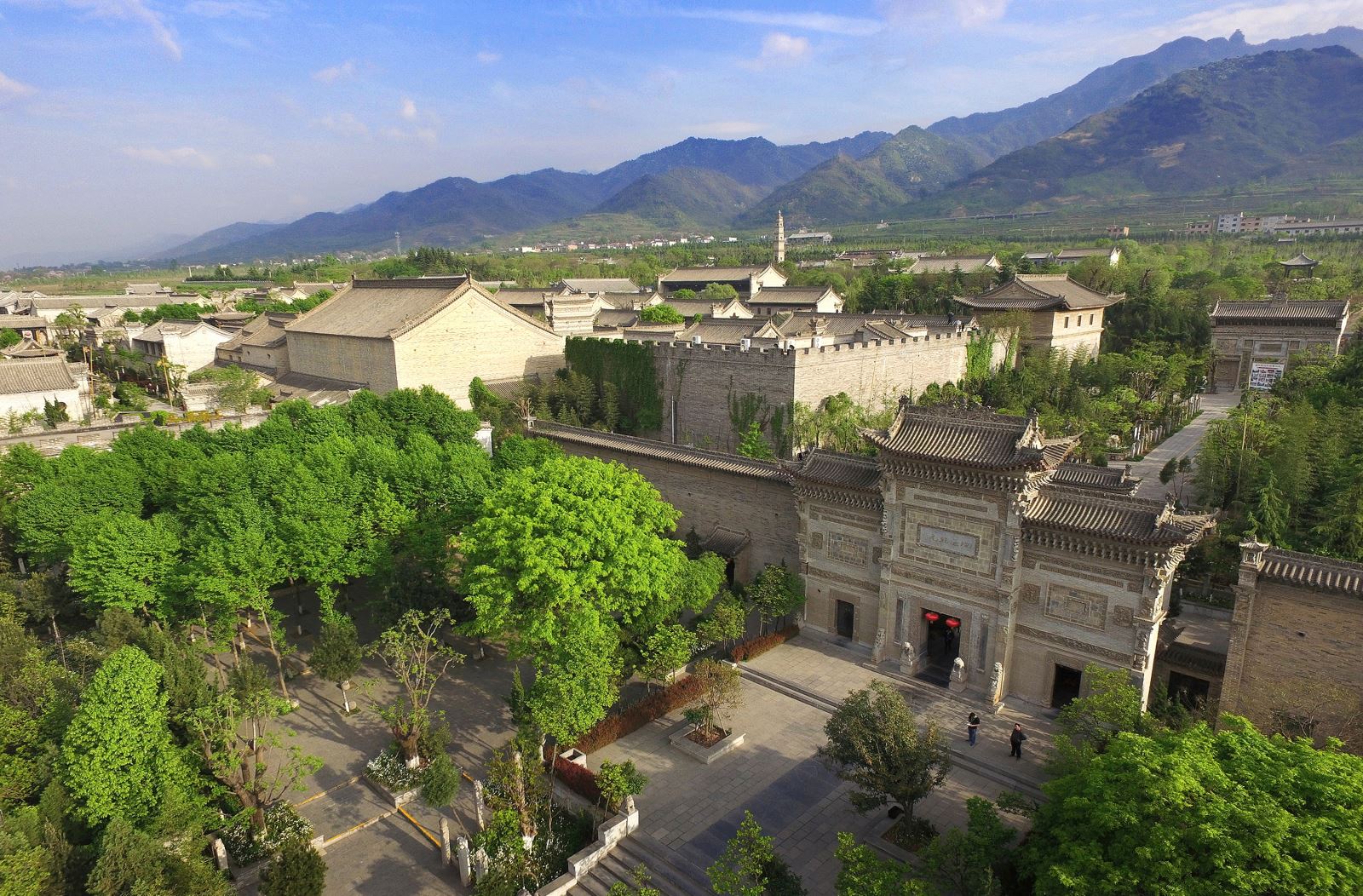
关中传统民居营造技艺
关中是我国建筑最早的发源地之一,传统民居营造技艺是关中地区广大人民群众在长期生产生活实践中创造出的古老营造技艺之一。
Guanzhong Traditional Residence Building Techniques
Guanzhong area is one of the earliest birthplaces of architecture in China. The traditional residence building technique is one of the ancient building techniques invented by Guanzhong area residents.
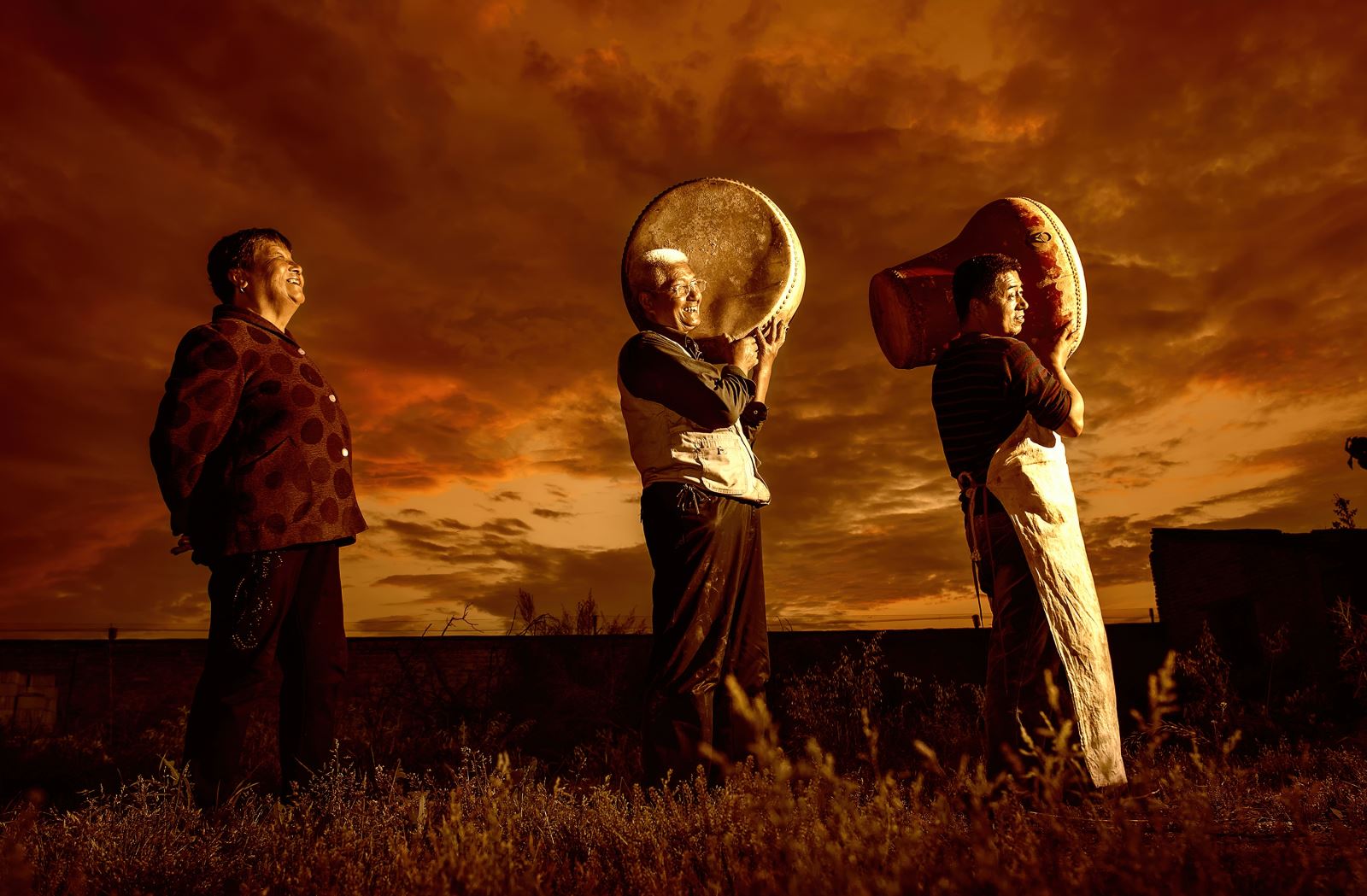
户县民间缯鼓制作技艺
户县民间制鼓技艺至今依然保持着完整的原始手工技艺特征,缯鼓是制鼓的核心技艺,由制作鼓腔、加工牛皮、缯皮和钉皮等四部分工序组成,是一项古老的手工技艺遗存。
Huxian Folk Drum Making Techniques
The folk drum-making technique in Huxian County still retains its original handicraft techniques. “Zenggu” drum-making basics comprise four processes, including drum cavity making, cow leather processing, leather stretching, and nailing. It is an ancient handicraft technique.
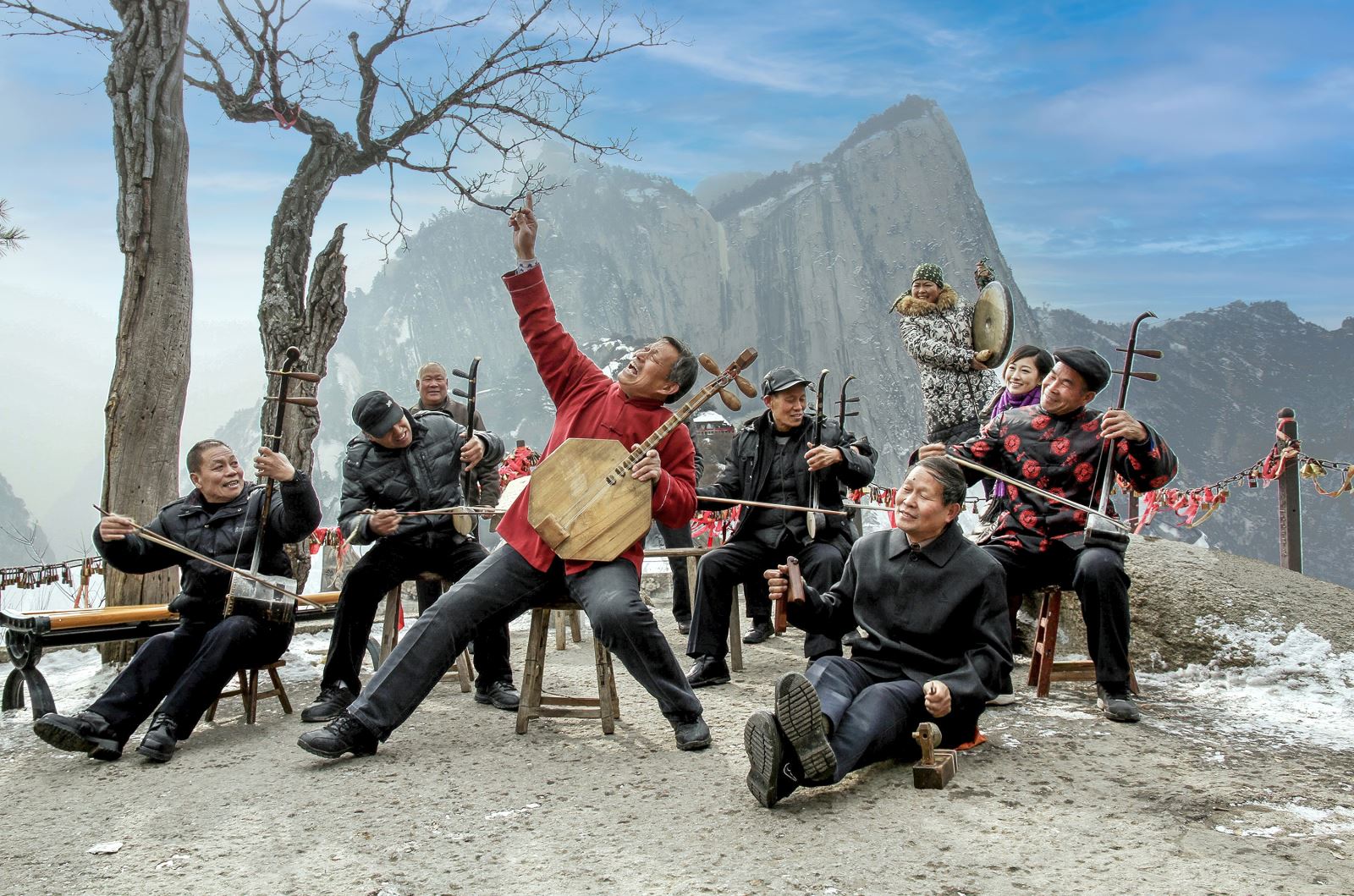
华阴老腔
华阴老腔系明末清初,以华阴当地民间说书艺术为基础发展形成的一种皮影戏曲剧种,在过去很长一段时间里是华阴泉店村张家户族的家族戏,世代流传。
Huayin Laoqiang
Huayin Laoqiang, a shadow play opera, developed based on local folk storytelling art in the Huayin area in the late Ming and early Qing dynasties. It was Zhang family opera in Quandian Village, Huayin City, passed down from generation to generation for a long time.
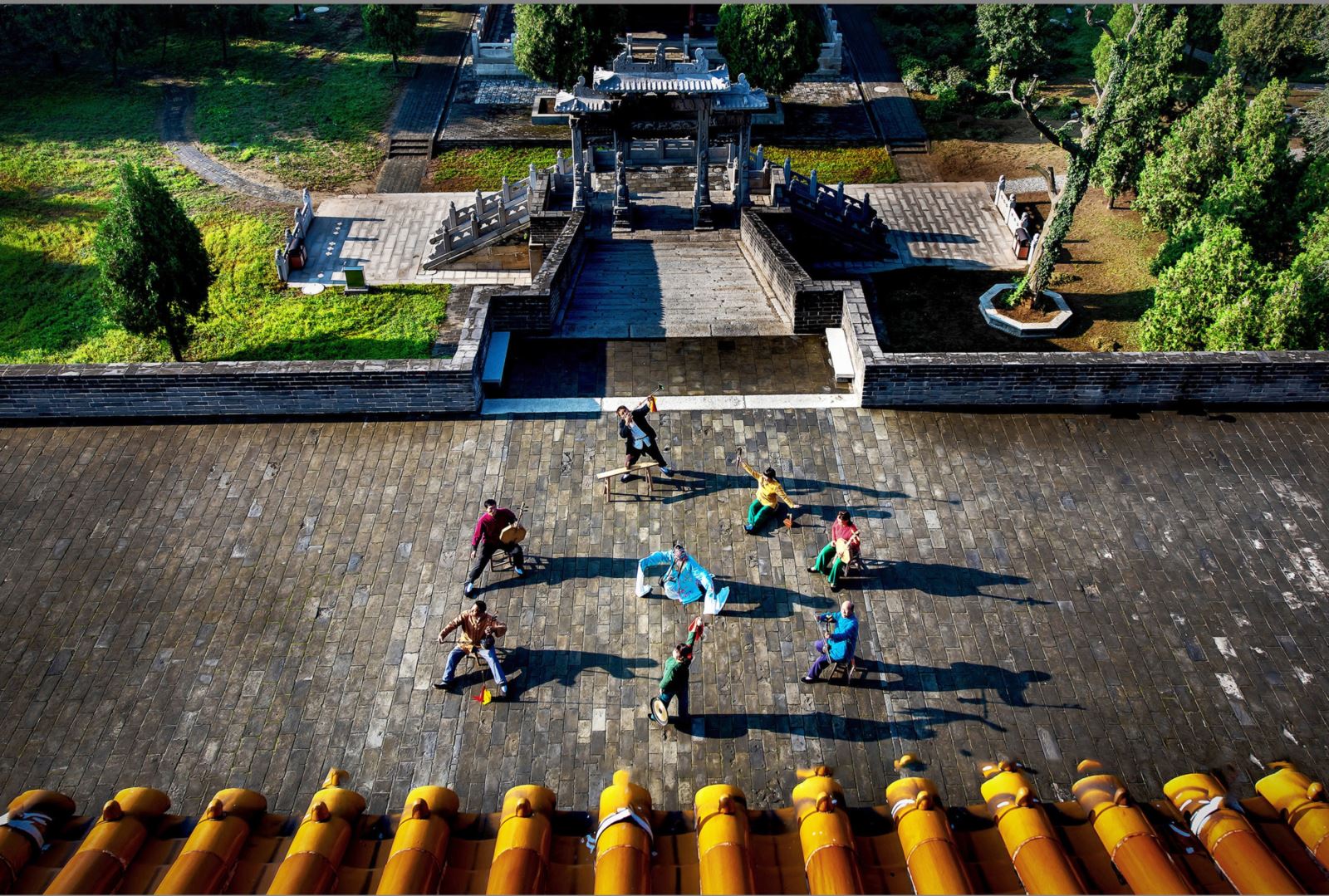
华阴老腔
华阴老腔声腔刚直高亢、磅礴豪迈,落音引进渭水船工号子曲调,采用一人唱众人帮合的拖腔;伴奏音乐不用唢呐,独设檀板的拍板节奏,构成了该剧种的独有之长,使其富有突出的历史和文化价值。
Huayin Laoqiang
Huayin Laoqiang has a vehement and high singing voice with bold majesty. At the end of a line the performer usually adopts a “dragging voice,” and all the singers on the stage will harmonize with him. This singing style originates from the Wei River boatmen’s work songs. The accompanying instrument is not the suona but hardwood clappers with a different rhythm. These are unique characteristics of Huayin Laoqiang, imparting distinct historical and cultural values.
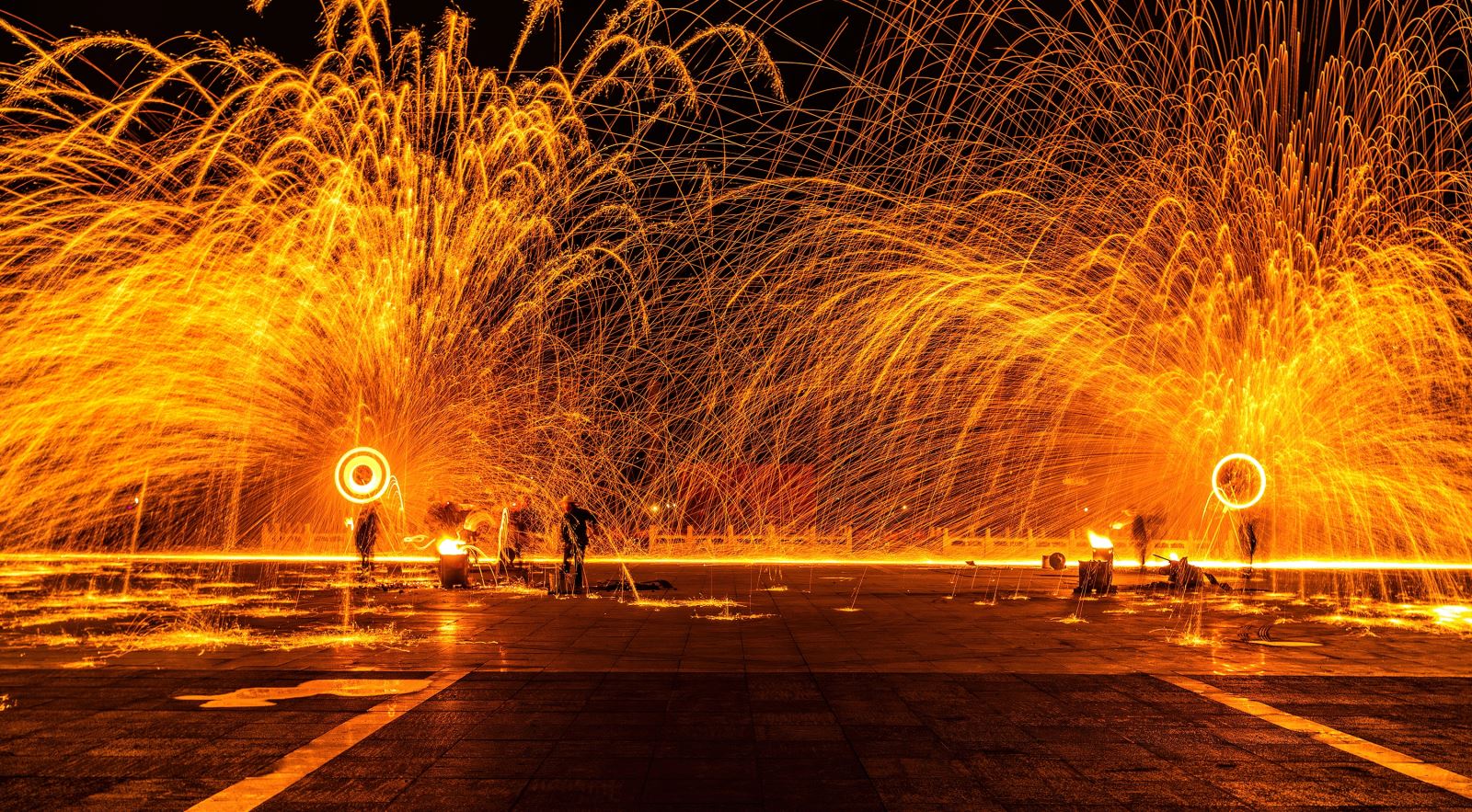
打铁花
打铁花是一种民间传统焰火,是中国古代匠师们在铸造器皿过程中发现的一种具有观赏性的表演技艺,至今已有千余年历史,多流传于黄河中下游地区。
Datiehua
Datiehua is a traditional folk firework that is performed with artistic value. Ancient Chinese artisans discovered it in the process of casting vessels. It is widely spread in the middle and lower reaches of the Yellow River, with a history of more than 1,000 years.
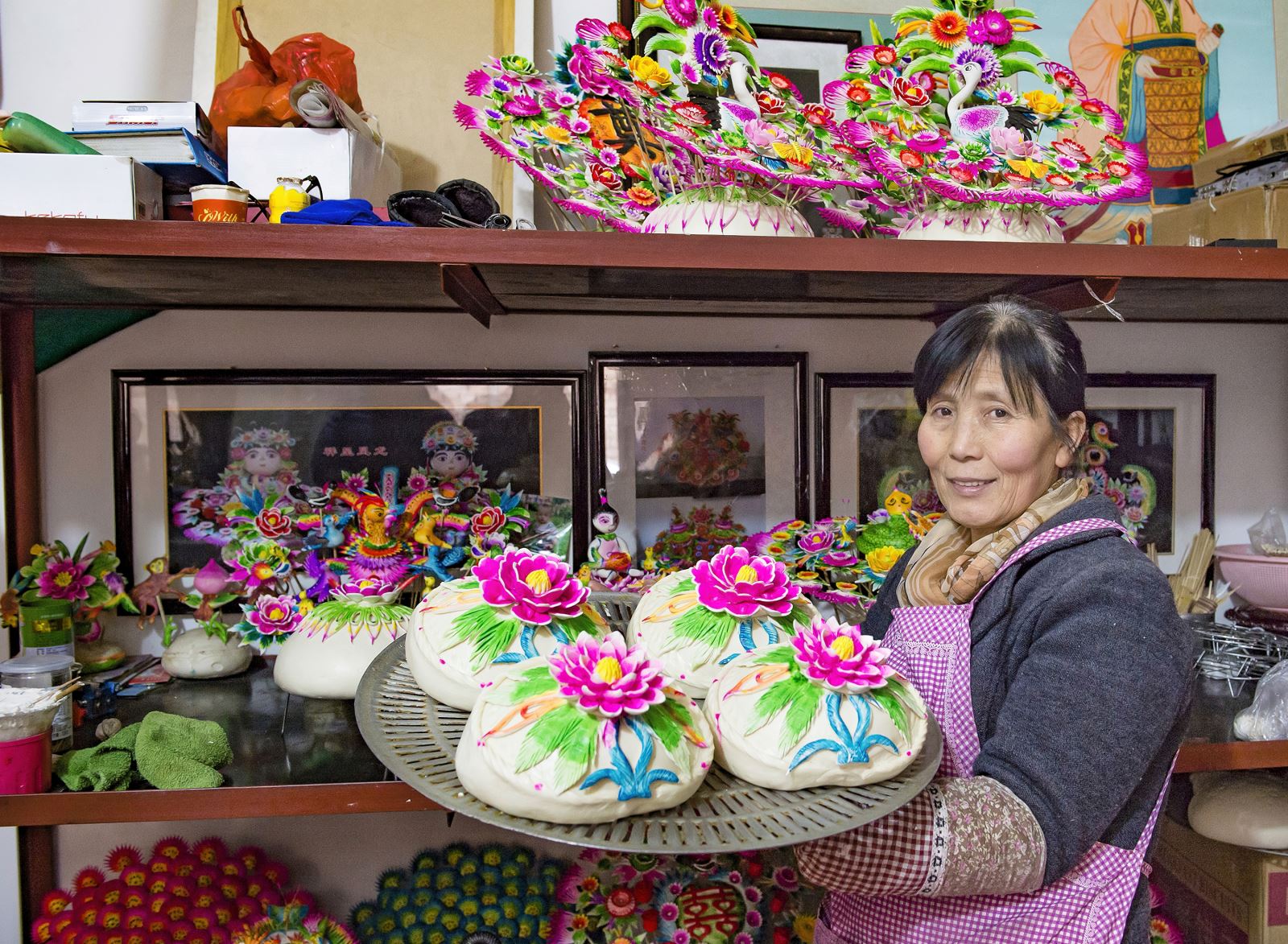
合阳面花
面花在合阳称为“花馍、花馒头”,是广泛流传在民间的一种民俗礼馍,既可观赏,又可食用,是艺术性颇高的民间手工艺品。
Heyang Dough Figurines
Dough figurines, called “flowery steamed buns” in Heyang County, are steamed buns for ceremonial purposes and are very popular among local people. This artistic folk handicraft is edible and has ornamental value.
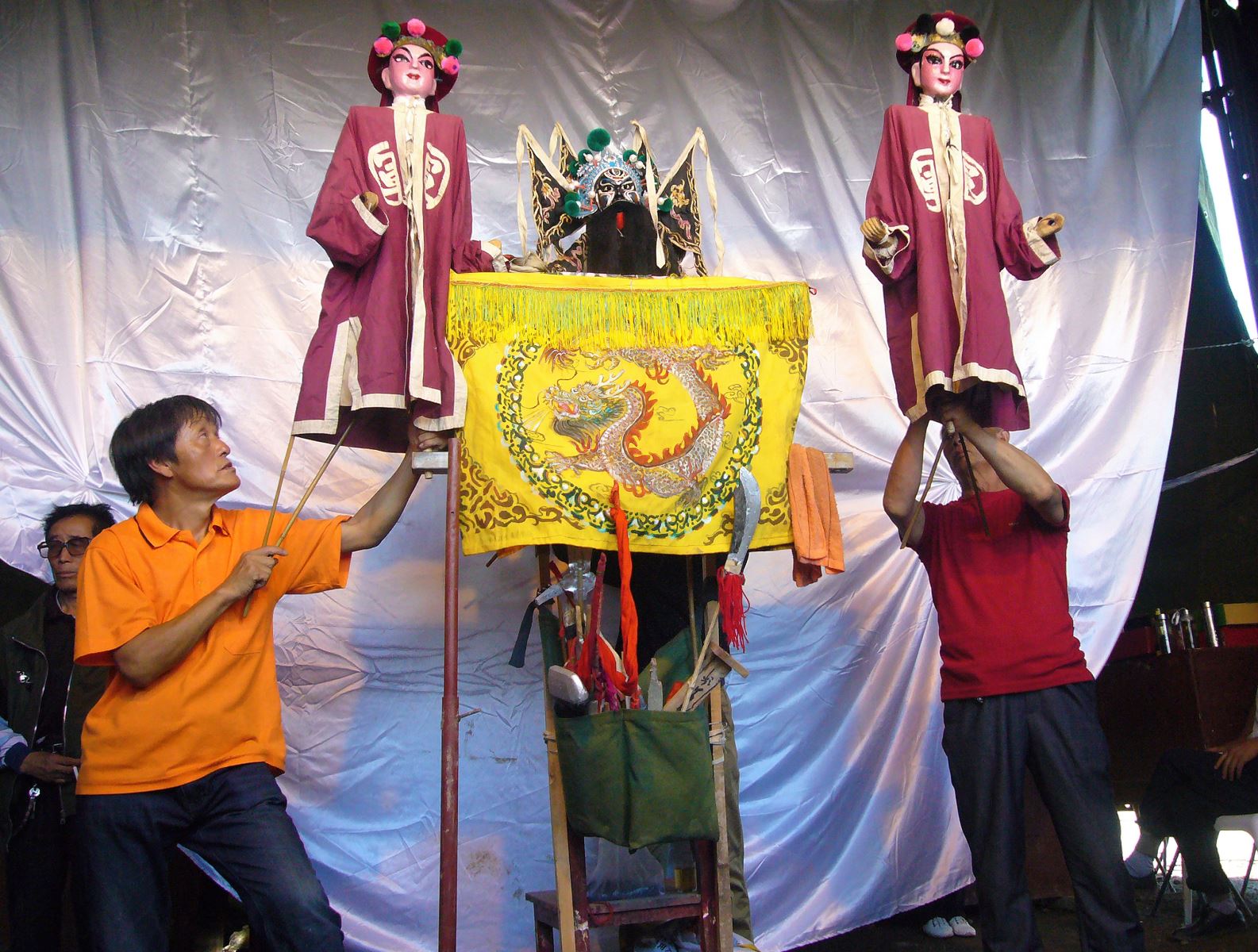
陕西杖头木偶戏
木偶戏是由艺人操作木偶表演故事的一种戏曲形式,起源于周,承于汉,原是一种宫廷艺术。在宋元戏剧出现后,木偶戏在宫廷中的地位逐渐衰落。由于木偶戏深受群众喜爱,一直在民间广为流传。
Shaanxi Rod-Puppet Show
Puppet shows are dramas with artists manipulating puppets and acting out stories. It originated in the Zhou Dynasty and further developed in the Han Dynasty. Although puppet shows were court art, they gradually declined in court due to the emergence of drama in the Song and Yuan dynasties but their appeal to the general public has never faded.
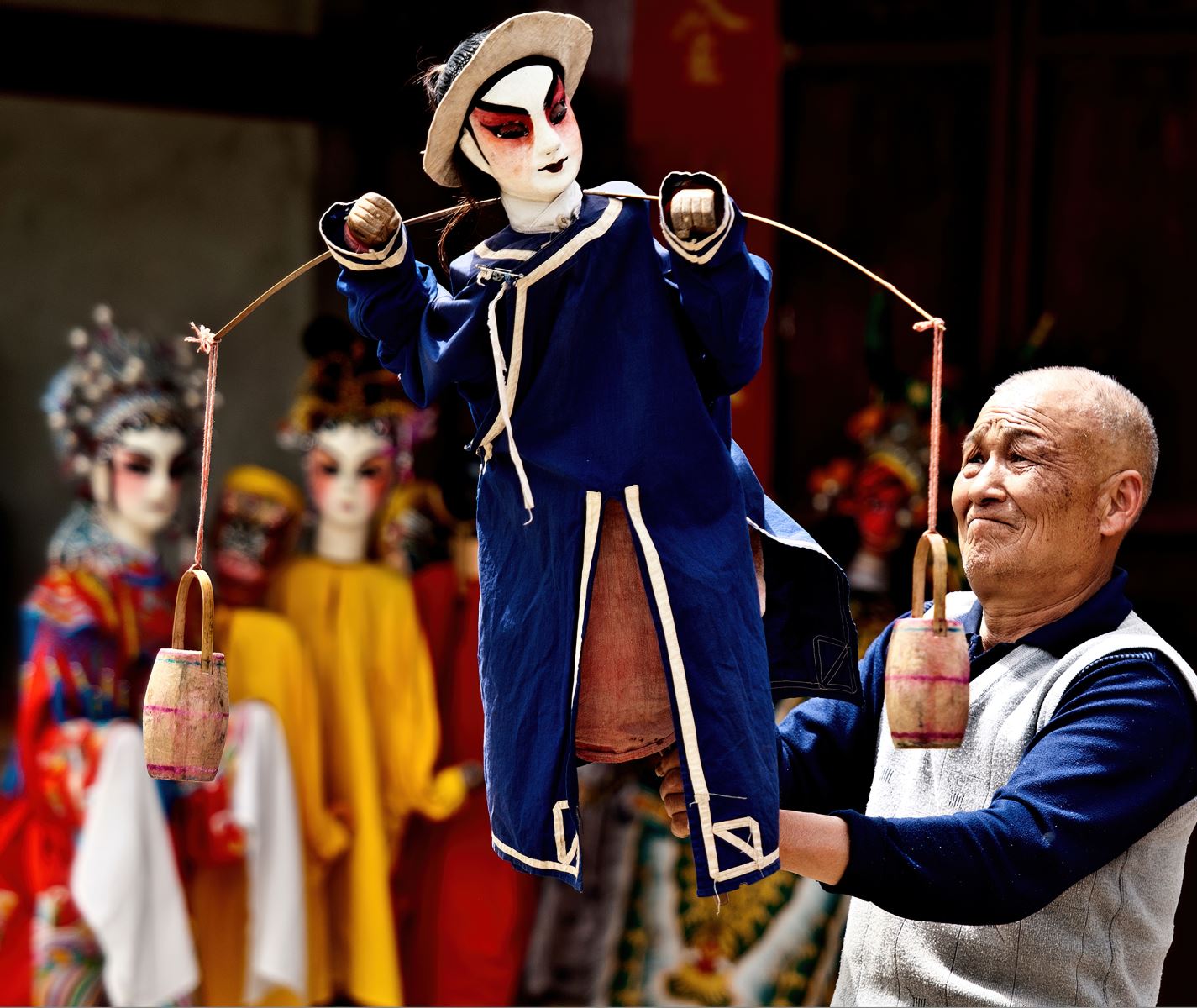
洋县杖头木偶戏
洋县杖头木偶戏是以汉调恍恍和秦腔为唱腔、以杖头木偶进行表演的地方剧种,它分布 在汉中市洋县城乡,已具备完整的表演体系和浓郁的地方特色。
Yang County Rod-Puppet Show
Yangxian Zhangtou rod-puppet shows are local operas performed by rod-puppets to the accompaniment of Han Tone “Huanghuang” and Qinqiang opera. It is popular in urban and rural areas of Yangxian County, Hanzhong City. It has a complete performance system and features strong local characteristics.
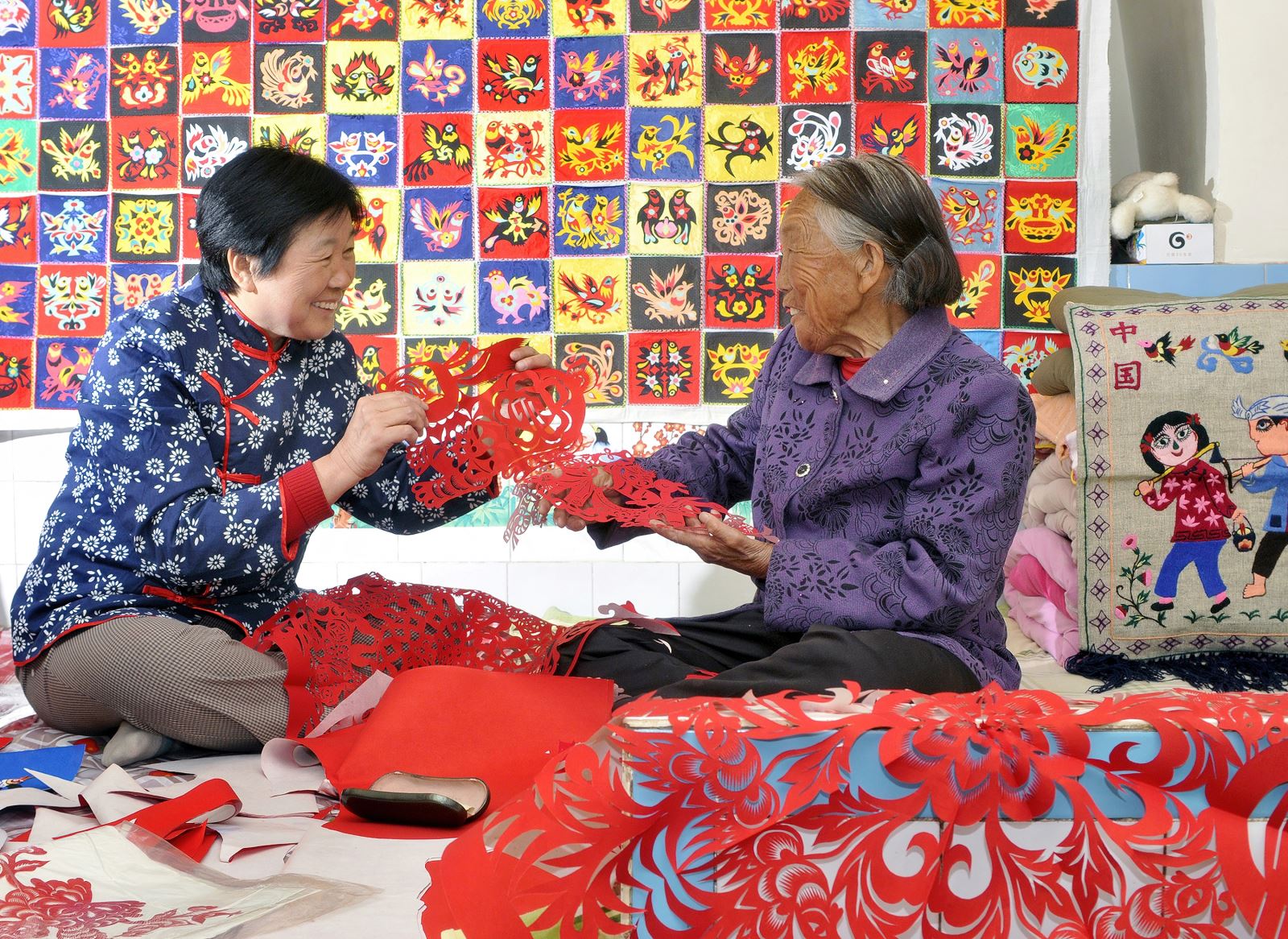
旬邑彩贴剪纸
旬邑剪纸相传起源于汉代,主要流传于陕西关中地区最北部旬邑县境内的中源张洪镇、太村镇、职田镇和赤道乡等地。至清代末年,旬邑剪纸由单色剪纸发展演变为彩贴剪纸。
Xunyi Decal Paper Cutting
Xunyi papercuts originated in the Han Dynasty and is popular in Zhongyuan Zhanghong, Taicun, Zhitian, and Chidao towns of Xunyi County in the northernmost Guanzhong area, Shaanxi Province. In the late Qing Dynasty, Xunyi papercuts developed from being monochrome to colorful.
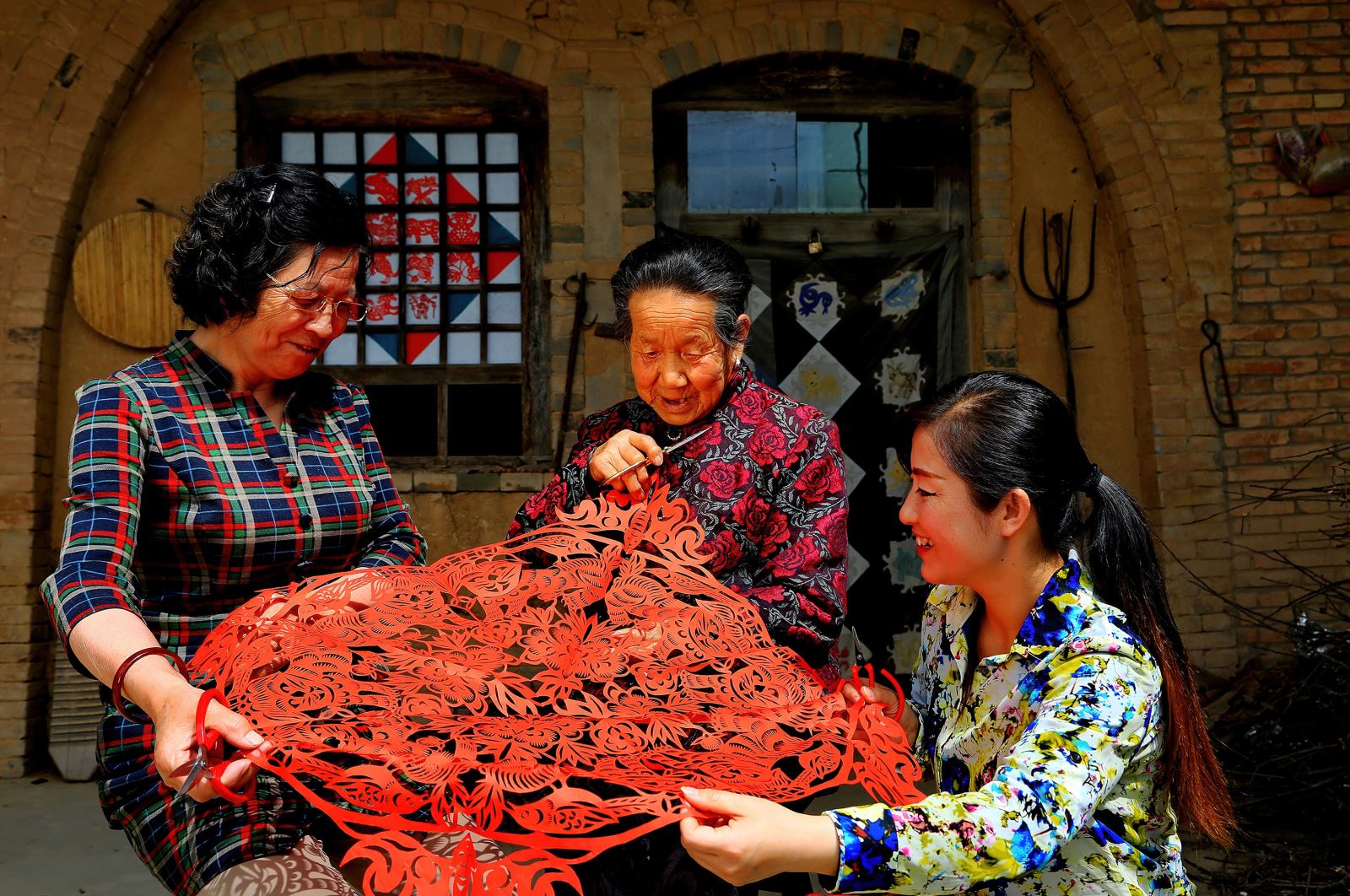
宜君剪纸
宜君剪纸最突出的特点是采用三维立体构图法,例如画面中的人是三面的,人也可以是七手八脚的,马是两个头,动物肚子里面的小生命也可以看见。
Yijun Paper Cutting
The most prominent feature of Yijun papercuts is three-dimensional composition. A human figure may have more than two hands or feet. Horses have two heads, and even the fetus inside the belly of pregnant animals is visible in Yijun papercuts.
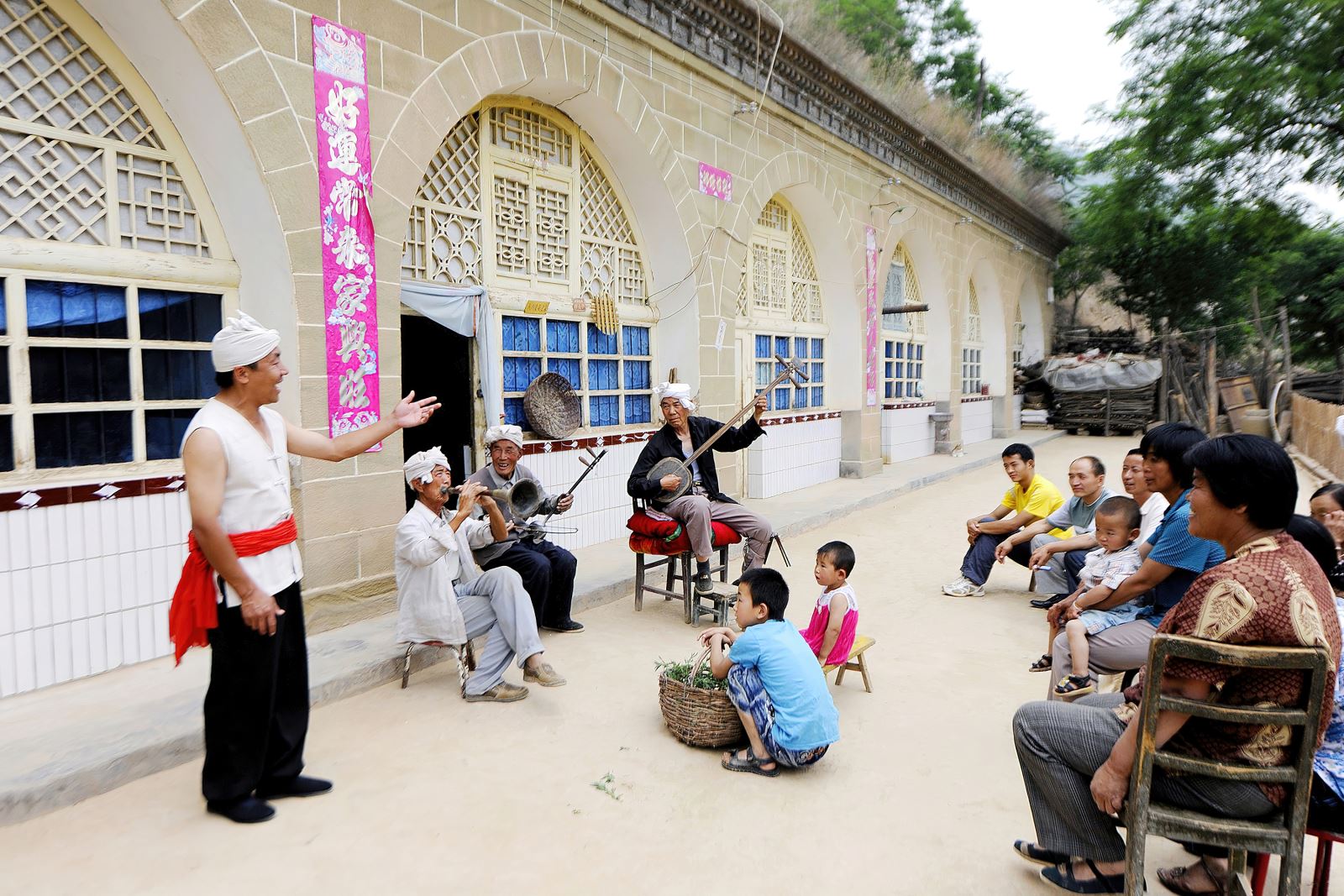
陕北说书
陕北说书的表演形式为一人自弹自唱,说唱相间,伴奏乐器为三弦或琵琶,还有绑在小腿上的以两块木板制成的耍板,以及绑在手腕上的打节奏用的“嘛喳喳”(用竹片做成枣核形状串在一起),极具特色。
Northern Shaanxi Story-Telling
Northern Shaanxi storytelling is usually performed solo. The performer plays and sings alone, alternating between narrating and singing. The instruments for accompaniment are quite distinctive, including the three-string lute, the Chinese lute, the shuaban tied to the legs, and the mazhazha tied to the wrist for rhythm. The shuaban consists of two wooden boards, and the mazhazha consists of several bamboo pieces in the shape of a jujube kernel.
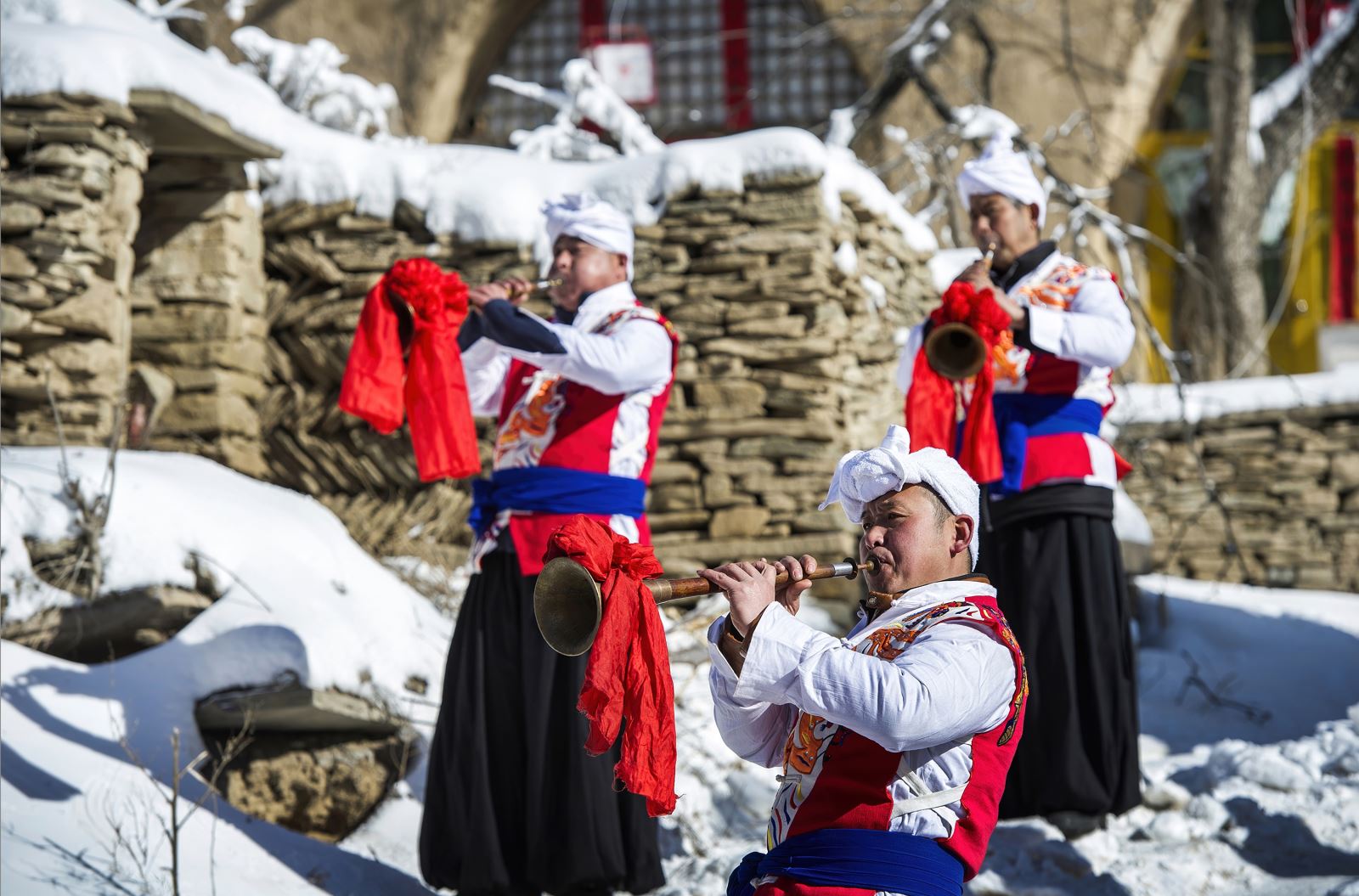
子长唢呐
子长市位于陕西省北部,子长唢呐是陕北唢呐的重要组成部分。据史料记载,唢呐是一种外来乐器,唢呐流传我国仅以明代算起至少也有五六百年历史。
Zichang Suona
Zichang City is located in north Shaanxi Province. Zichang Suona is an important part of northern Shaanxi Suona. According to historical records, the suona, originally a foreign musical instrument, has a history of 500-600 years since the Ming Dynasty.
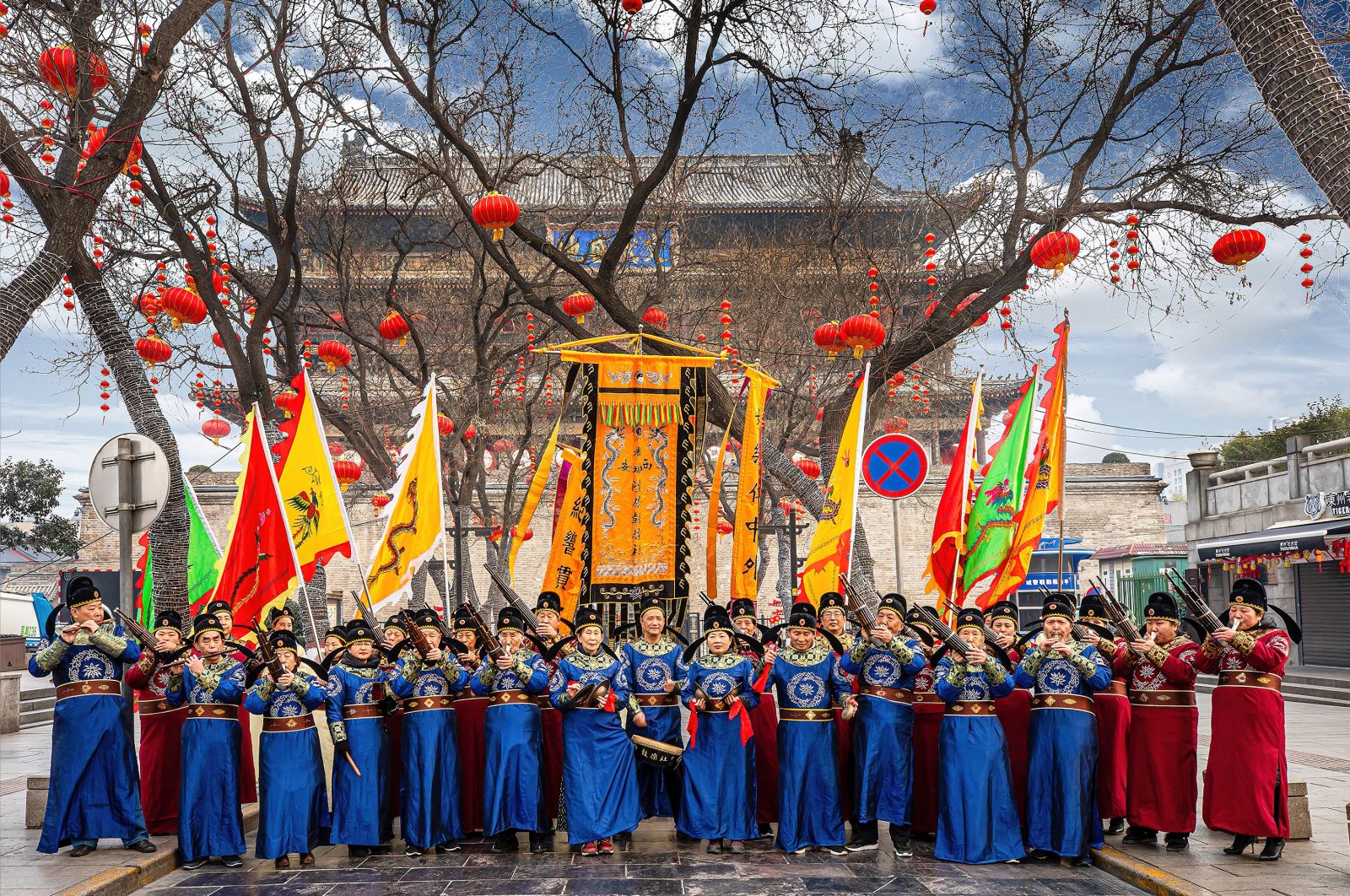
西安鼓乐
西安鼓乐也称长安古乐,是迄今为止在中国境内发现并保存最完整的大型民间乐种之一,是中国古代传统音乐的重要遗存,被国际音乐界和史学界誉为“中国古代音乐活化石”。2009年,被列入《人类非物质文化遗产代表作名录》。
Xi’an Drum Music
Xi’an Drum Music, also known as Chang’an Ancient Music, is one of the most well-preserved large-scale folk music discovered in China. It is an important legacy of ancient Chinese traditional music and is extolled as “a living fossil of ancient Chinese music” by domestic and foreign musicians and historians. In 2009, it was listed in the UNESCO’s Representative List of the Intangible Cultural Heritage.
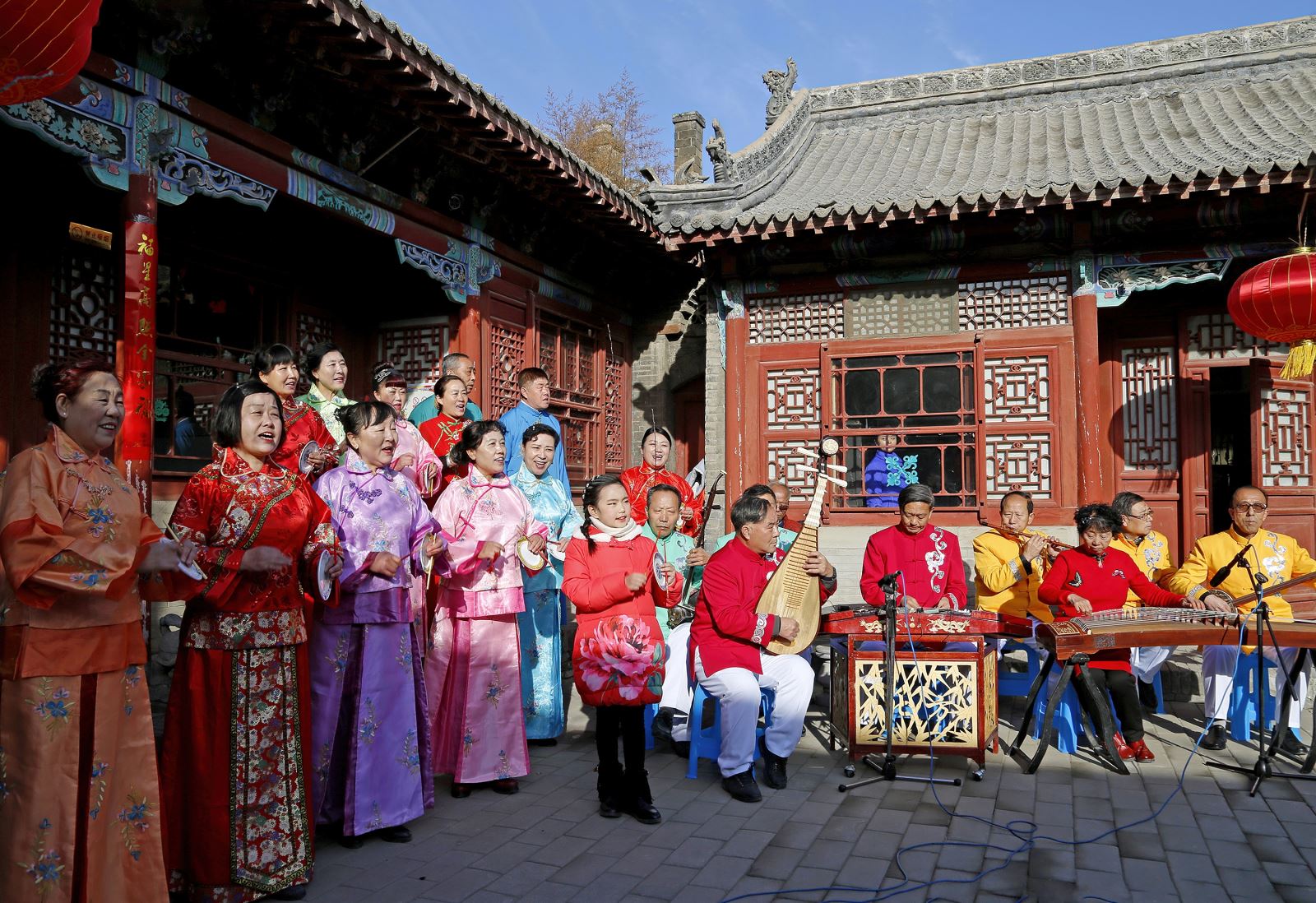
榆林小曲
榆林小曲的内容以反映城市生活情趣为多,其中描写离愁别绪、男情女爱的曲目占较大 比例。榆林小曲的结构分为小曲(即单曲)和联唱(即联套)两种形式,器乐曲牌约有50 多首。
Yulin Ditties
The content of Yulin ditties mainly reflect a taste for urban life. Songs describing the sorrow of parting and the pleasure of love account for a large proportion. The structure of Yulin ditties is divided into ditties (single song) and joint songs (joint set). There are about 50 instrumental music pieces of Yulin ditties.
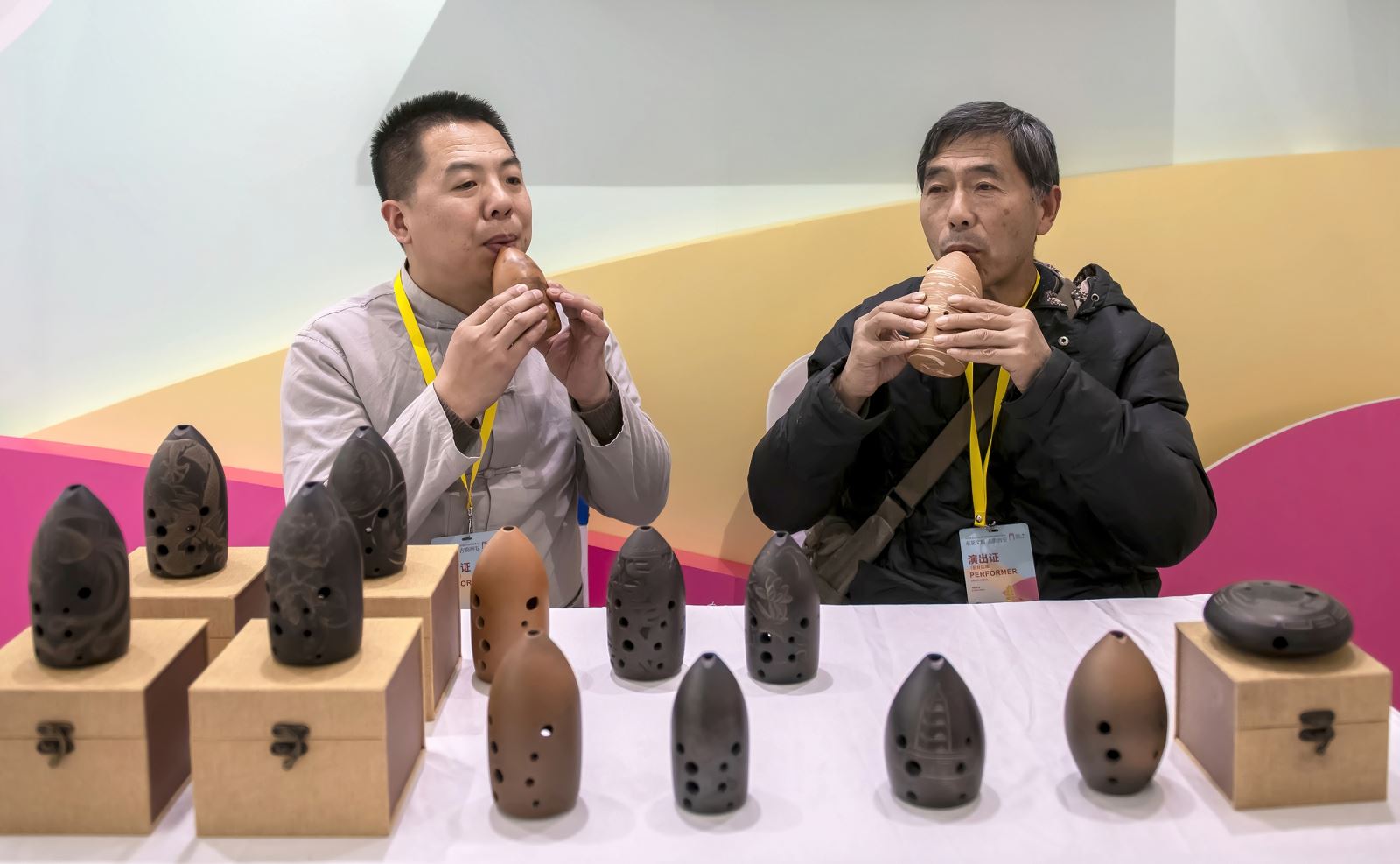
埙乐艺术
埙是原始先民在长期的生产和生活实践中创造出来的乐器。1957年,在西安半坡遗址出土的两枚陶哨(埙),一个只有吹孔,另一个有一吹孔和一音孔,距今大约6700年左右。
Two-string Fiddle Music Art
Xun, an ancient egg-shaped, holed wind instrument, was invented by primitive people in their production and life. In 1957, two pottery whistles (xun) with a history of 6,700 years were unearthed at the Banpo Ruins of Xi’an. One had only blowholes, the other with a blowhole and a soundhole.
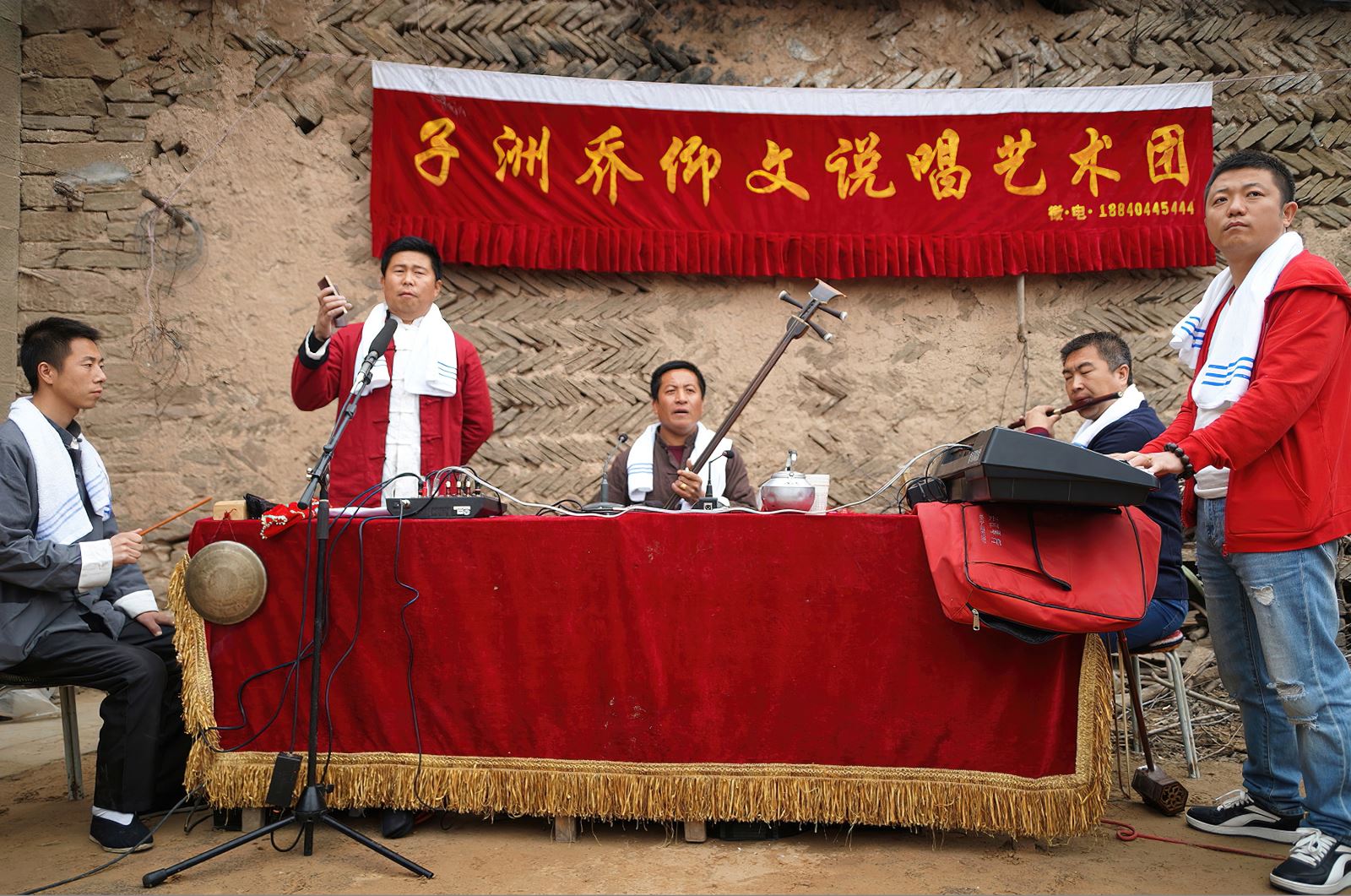
陕北道情
陕北道情是陕北地区传统曲艺曲种之一,流行于清涧、子长、志丹、吴起、绥德、榆林、子洲、定边、靖边、神木、府谷等县(市)。
Northern Shaanxi Daoqing
Northern Shaanxi Daoqing, a traditional opera in north Shaanxi, is popular in several cities and counties, including Zichang, Yulin, Shenmu, Qingjian, Zhidan, Wuqi, Suide, Zizhou, Dingbian, Jingbian, and Fugu.
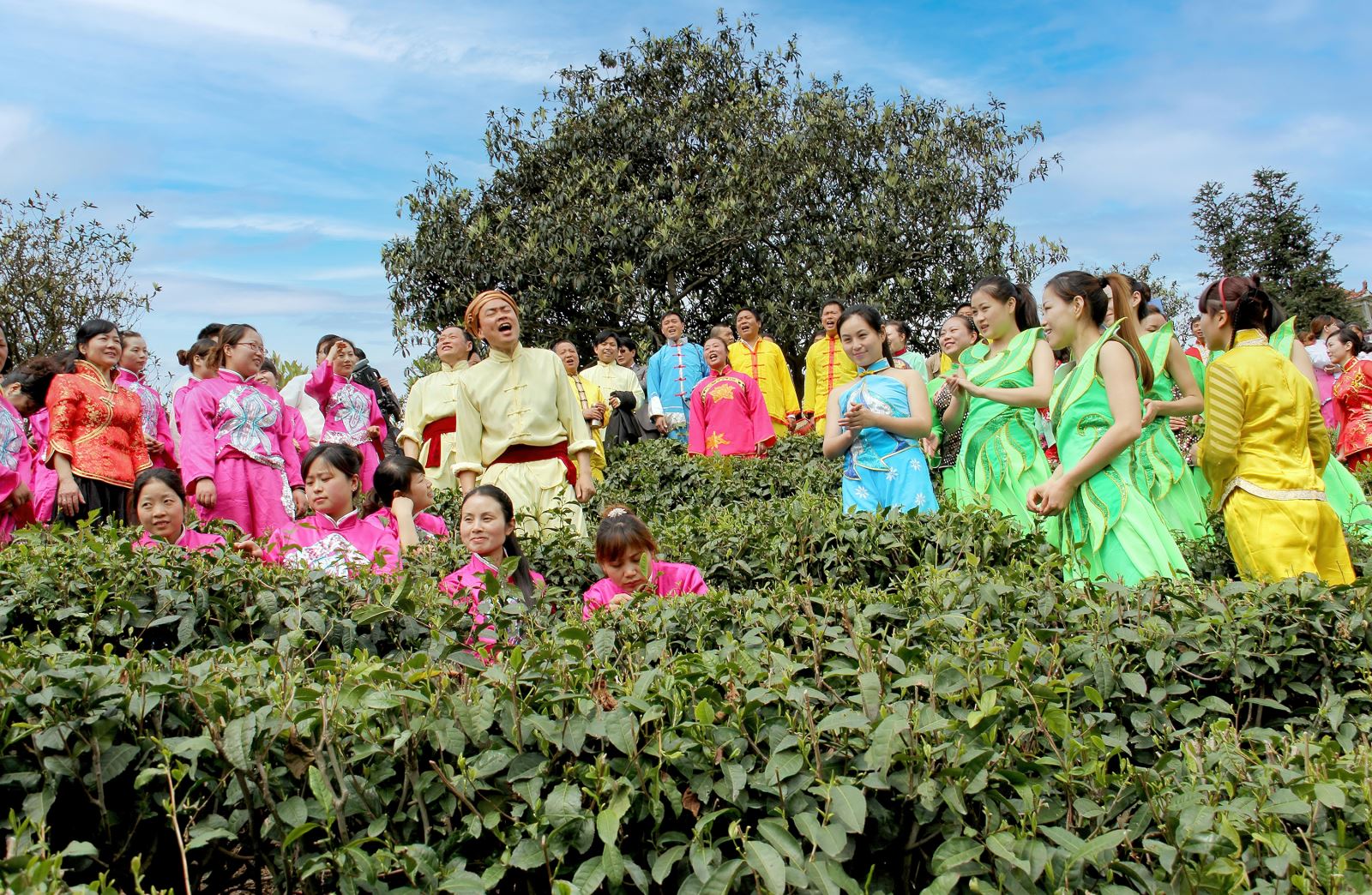
紫阳民歌
紫阳民歌是流传在陕西安康市紫阳县境内传统民间歌曲的总称,是陕南地区传统民歌中最具代表性的曲种。它语言形象生动,曲调优美动听,具有鲜明的艺术特色和地方风格。
Ziyang Folk Songs
Ziyang folk song is the general term for traditional folk songs that are popular in Ziyang County, Ankang City, Shaanxi Province. As a representative of traditional folk songs in southern Shaanxi, it has vivid lyrics, beautiful melody, distinctive artistic characteristics, and local style.
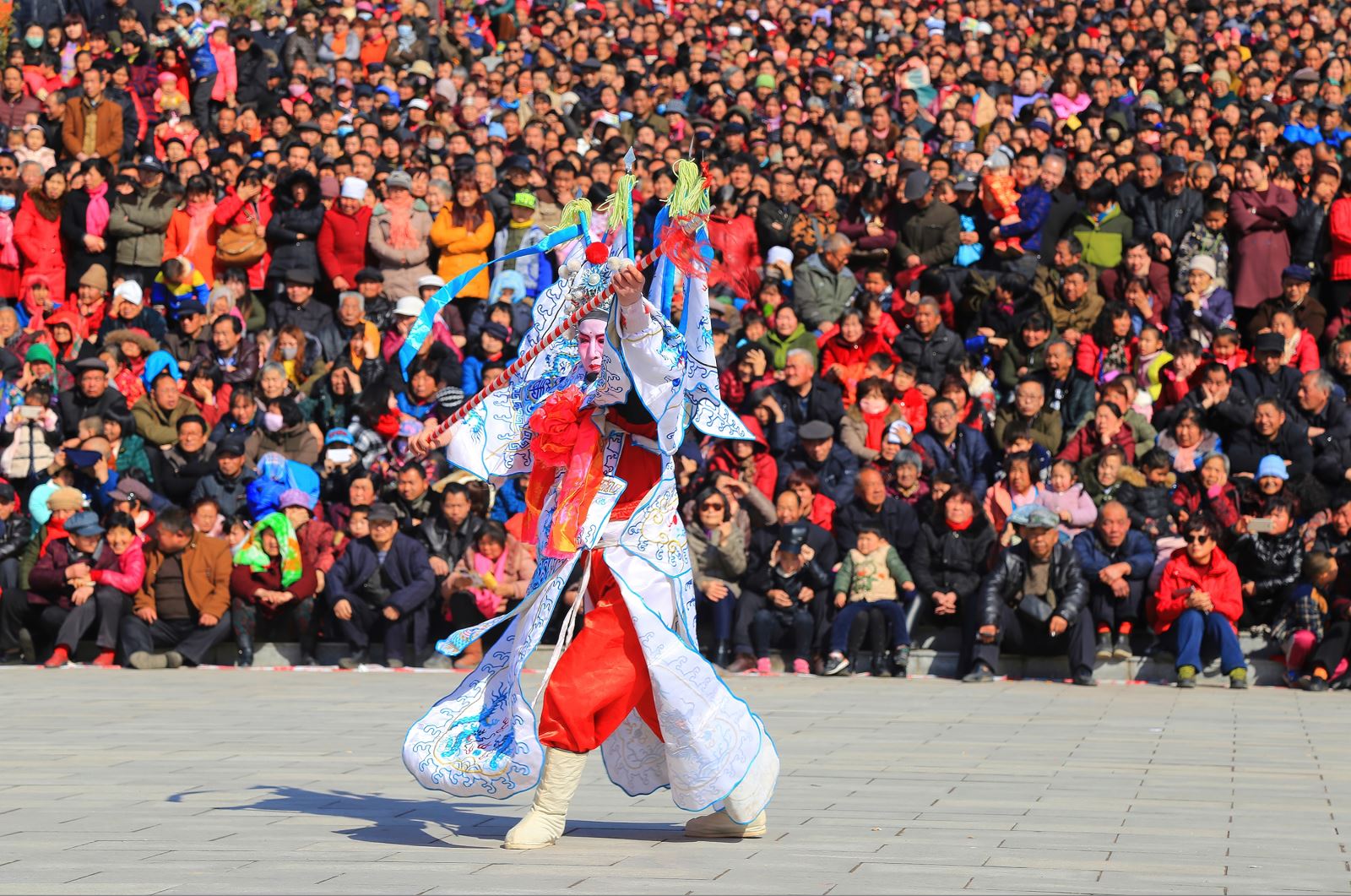
合阳跳戏
跳戏属社戏性质,演出时没有唱腔,不用弦乐伴奏,只有大锣、大鼓、铙钹和唢呐,演出者以表演舞蹈动作为主,同时用“说”“吟”完成“唱”“白”任务,特色鲜明。
Heyang Dance Drama
Dance drama is a part of Shehuo. In this special performance, there is no singing or string music accompaniment. Instruments used in dance drama include big gongs, big drums, cymbals, and suonas. The performers focus on the dance and complete the tasks of “singing” and “telling” with “speaking” and “chanting”.
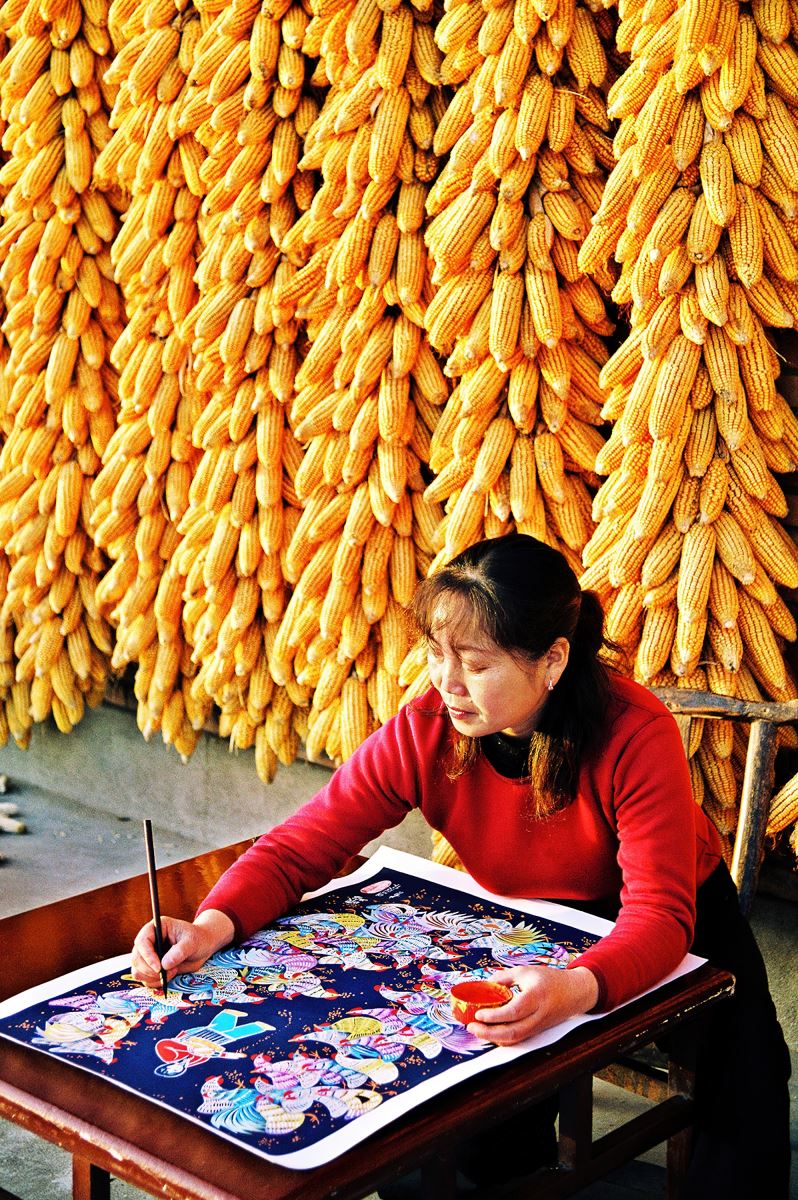
户县农民画
户县农民画源于民间,在陕西关中地区的剪纸、壁画、年画、刺绣等民间艺术基础上演变而来,它以朴实的绘画语言,大胆丰富的想象,简洁饱满的画面,反映农村生产生活和民风民俗。
Hu County Farmer Paintings
The farmer paintings of Hu County originated in local people and were developed based on the folk arts such as paper cutting, murals, New Year paintings, and embroidery in Guanzhong area, Shaanxi Province. It reflects the rural life and folk customs with simple painting, unrestrained and rich imagination, and concise but lively pictures.
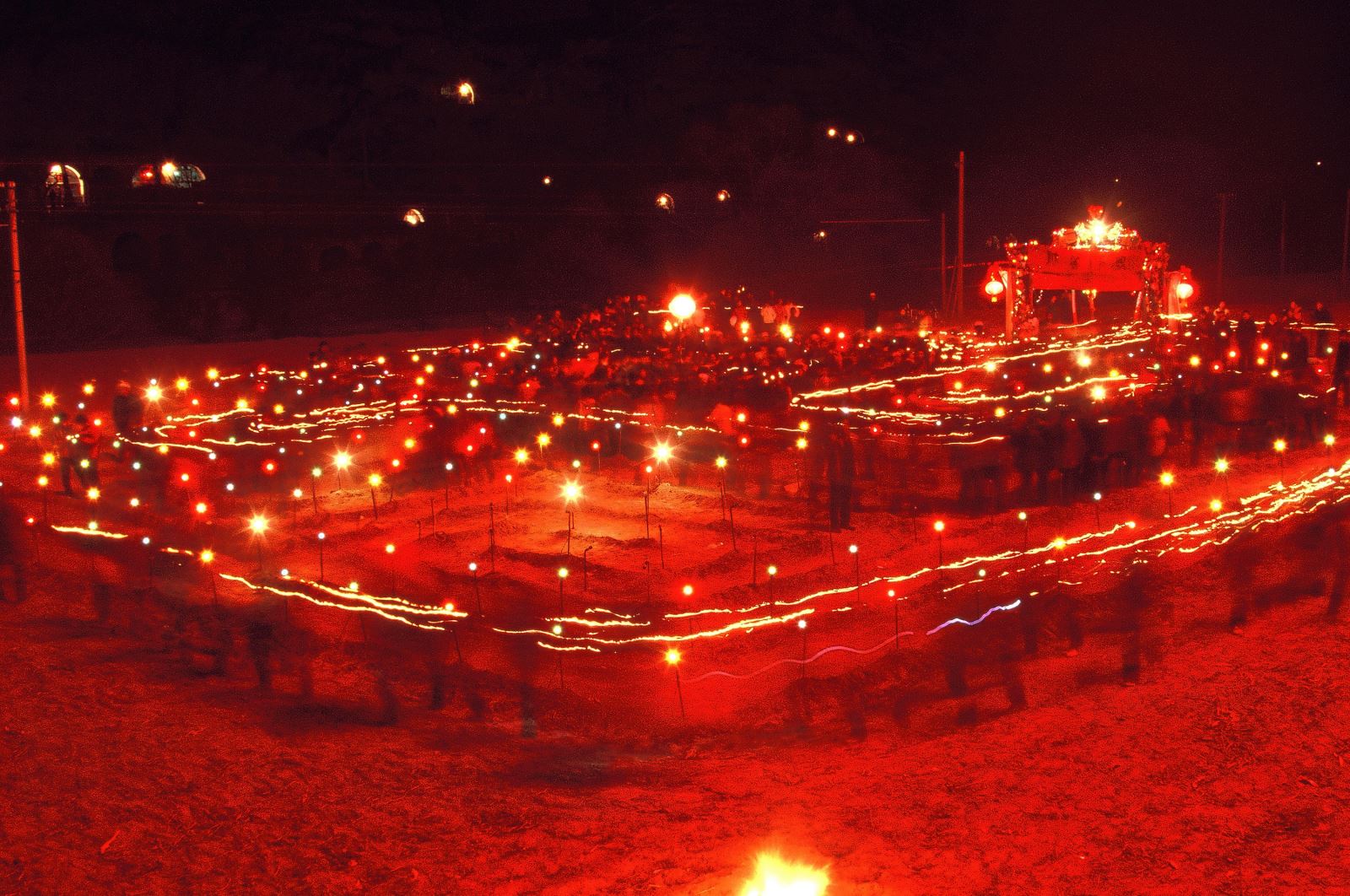
安塞转九曲
安塞位于陕西省北部,“转九曲”是当地独具特色的民俗文化形式,俗称“观灯”,一般在特定节庆期间进行,是群众希望吉祥平安、消灾免难的祈福活动。
Ansai Zhuanjiuqu
Ansai is located in the northern Shaanxi Province. “Zhuanjiuqu” is a folk culture activity with unique local characteristics, commonly known as “Lanterns Watching”. It is generally held during special festivals as a worship activity for local people to pray for good luck and safety.
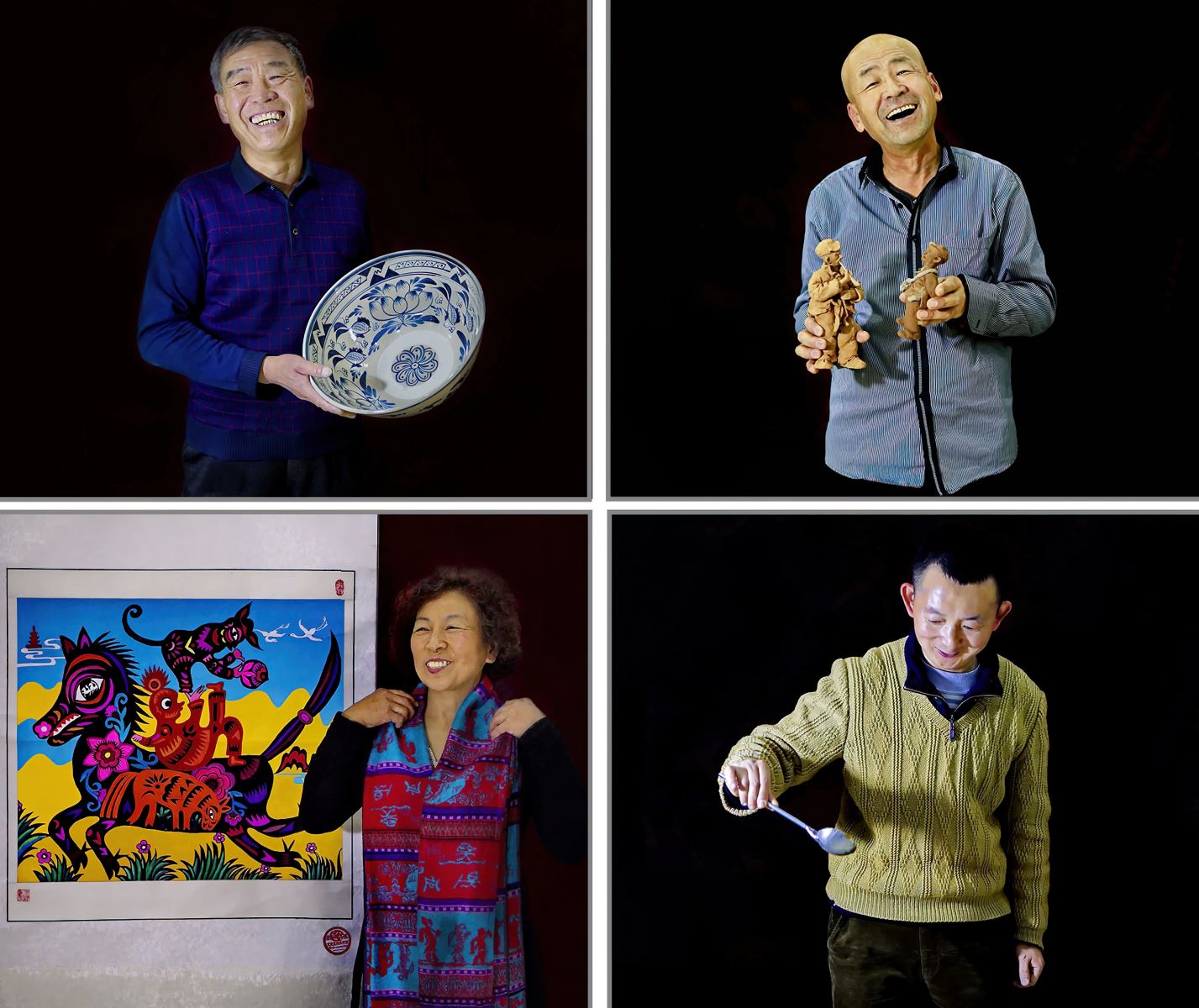
陕西非遗传承人
非物质文化遗产的大部分领域,如口头文学、民间绘画、表演艺术、手工技艺、民间知识等,一般是由传承人的口传心授得以代代传递延续,他们既是非物质文化遗产的“活宝库”,又是非物质文化遗产的当代代表人物。
Inheritors of Intangible Cultural Heritage in Shaanxi
In most fields of intangible cultural heritage, such as oral literature, folk painting, performing arts, handicrafts, and folk knowledge, heritages are generally passed down from generation to generation by inheritors, who are not only the “living treasure house” of intangible cultural heritage but also contemporary representatives of intangible cultural heritage.
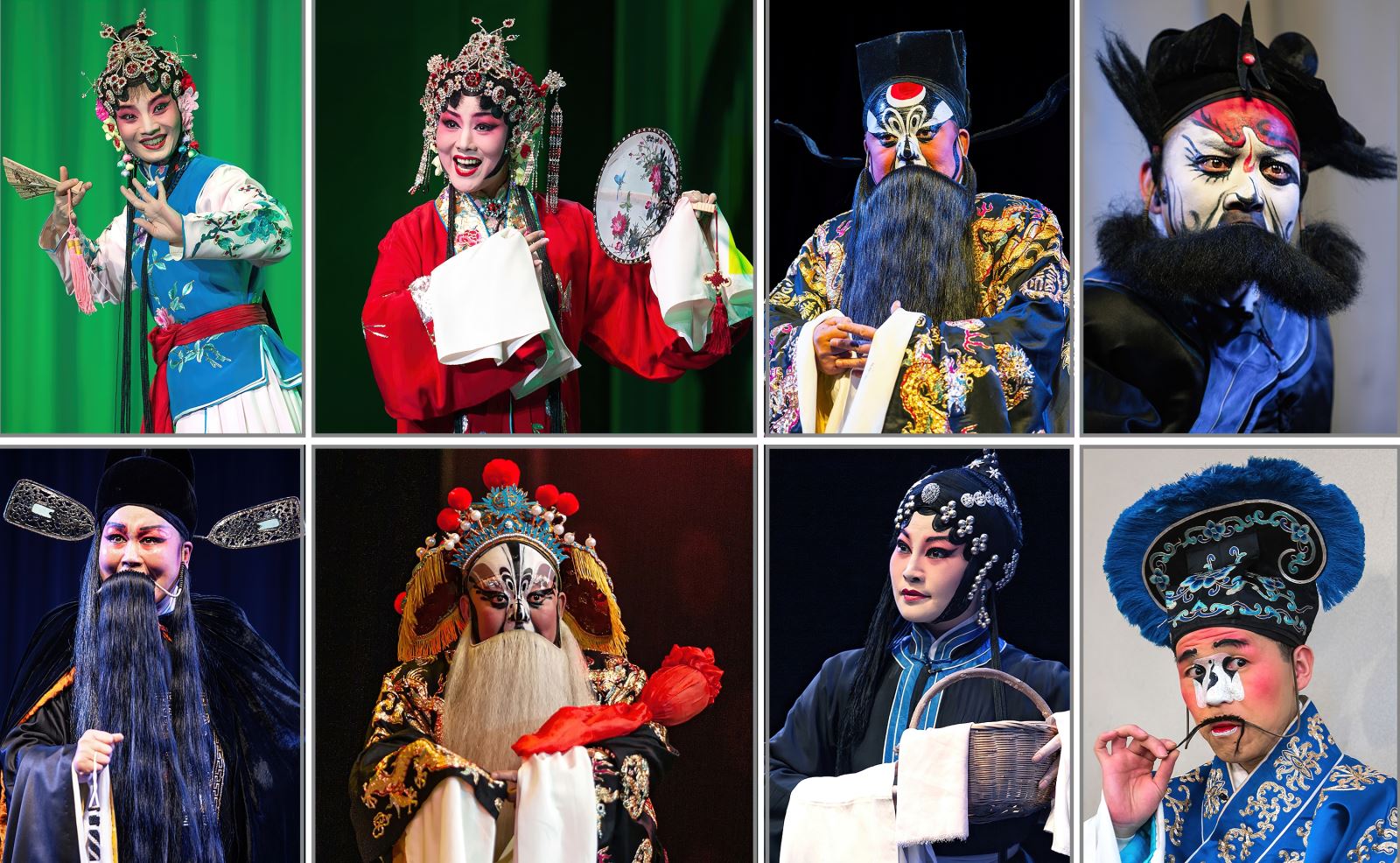
秦腔生旦净丑
秦腔戏曲表演中,“生行”是扮演男性角色的一种行当;“旦行”是扮演各种不同年龄、身份的女性角色;“净行”俗称“花脸”,一般都是扮演男性角色;“丑行”又叫“小花脸”“三花脸”。
Qinqiang Opera
In Qinqiang opera performances, “Sheng” is the male role and “Dan” is the female role with different ages and identities. “Jing”, commonly known as “Hualian”, is usually a male role. “Chou” is also called “Xiaohualian” or “Sanhualian”.